
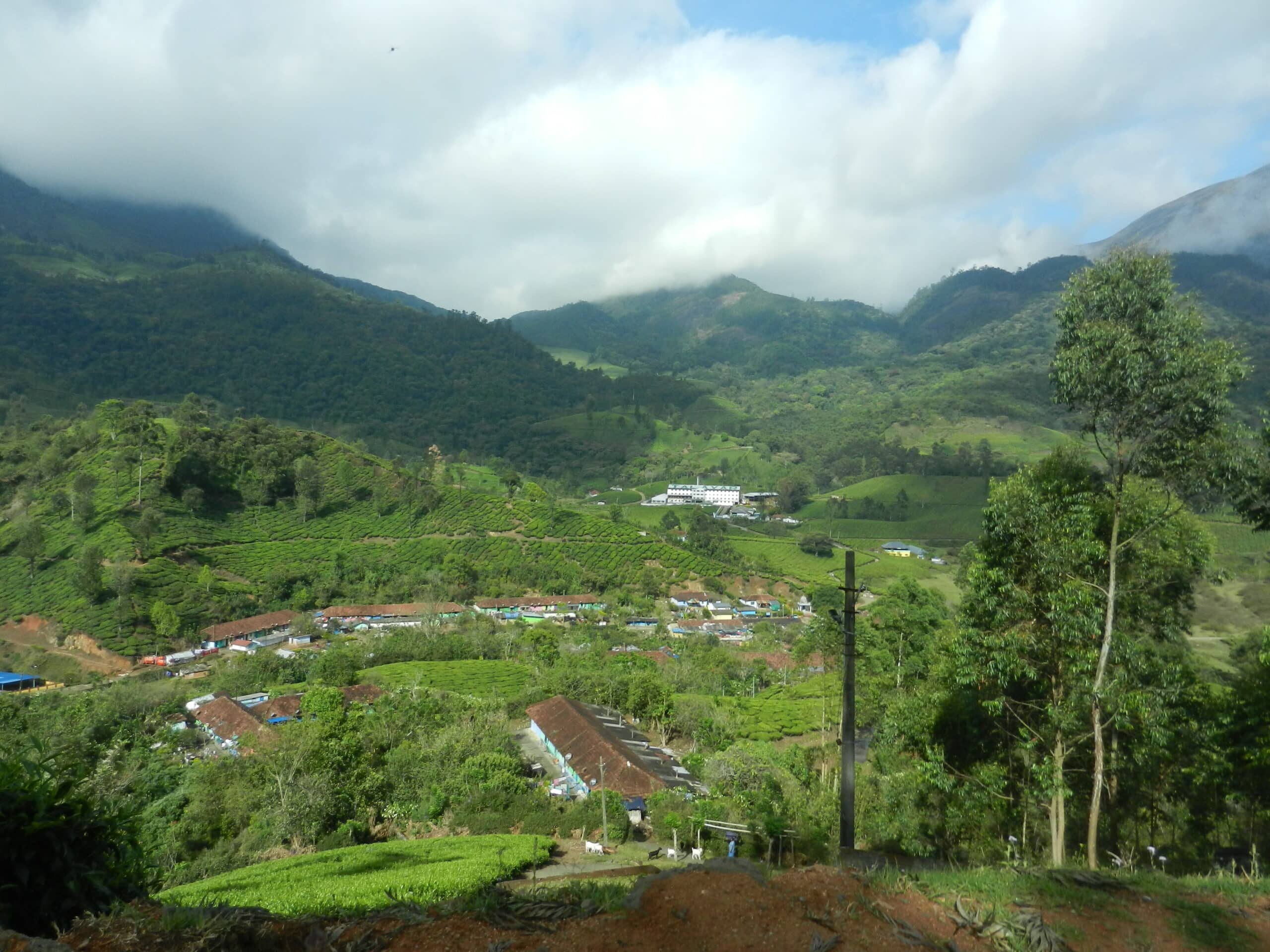
A first glance at India’s new labour laws …and how they may affect tea plantation workers
The changing legal environment
For nearly seven decades, the Plantation Labour Act, 1951 (PLA), has been the main piece of legislation governing living conditions and welfare on tea plantations in India. It has now been repealed as part of sweeping changes in Indian labour law.
Stirling Smith, a THIRST trustee, and former ILO official based in India, discusses the possible impact of these changes.
Labour law changes
The BJP-led government has, since 2014 when it first came into power, been engaged in a process of labour law reform. This has been controversial; most of India’s trade unions oppose the changes, which came into legal effect in November 2025
A total of 29 laws have been streamlined into four codes*:
- The Code on Wages, 2019;
- The Occupational Safety, Health and Working Conditions Code, 2019;
- The Industrial Relations Code 2019; and
- The Social Security Code, 2019.
Some significant labour laws have been left outside this process of streamlining and consolidation. For example, the laws on the prevention of bonded labour and child labour and the Sexual Harassment of Women at Workplace (Prevention Prohibition and Redressal) Act, 2013, have not been included.
For the purposes of this blog, the two codes that are most interest are those on wages (the Code on Wages, 2019) and occupational safety, health and working conditions (the OSH Code).
Repeal of the Plantation Labour Act
Section 134 of the OSH Code lists the Plantation Labour Act as one of several existing pieces of legislation that will be repealed. There is a slight change to the definition of a plantation that will be included in the provisions of the new law. The number of workers employed to trigger a tea “garden” to fall within the definition of plantation is reduced from 15 to 10. In practice, this is unlikely to make much difference.
Employer obligations under the PLA
Section 24 of the new OSH code carries over the obligation of plantation employers to provide the same range of services as currently under the PLA.
(4) Every employer of plantation shall be responsible, subject to the provision of sub-sections (1) to (3), to provide and maintain welfare facilities through his own resources relating to drinking water, housing, medical, education and toilet to the workers in the plantation or through schemes for such purpose sponsored by the Central Government or State Government, Municipality or Panchayat for the locality in which the plantation is situated.
The clause seems to leave open the option that these services can be provided through schemes sponsored by central or state government.
To clarify, although the Plantation Labour Act will stand repealed, this will make no difference to the legal obligation on employers to provide a wide range of services to workers, thus maintaining the principle of “in-kind” wages.
The new law involves both the central government and the state government; the central government passes the code, but the state government must make detailed rules to implement the codes and is responsible for setting up an inspecting staff who will – in theory – check plantations to make sure they are complying.
The most important tea growing states – Assam, West Bengal, Kerala and Tamil Nadu – have already drafted the necessary rules and will now need to formally adopt her. This process is usually known as “gazetting”, as the legislation will be published in the official state gazette.
To take the draft Assam rules as an example, they state that the employer must
Make available all central or state government schemes to provide housing accommodation, including drinking water and toilet, crash facilities and education facilities to their workers…. If the employer fails to facilitate and make available all the aforementioned facilities within six months from the date of commencement of these rules, he/she shall provide such facilities of same standard from his own resources.
Will state government step up to the plate?
It is not clear what will happen. Tea plantation employers’ associations have long called for state governments to take over funding of these facilities. But state governments have traditionally been reluctant to agree, preferring to provide the facilities directly.
Employers might hope that the state government will purchase the houses, and similar infrastructure. This could be what is meant by “facilitate”. Agreeing on a price would be difficult.
Nothing will happen before February 2026 when assembly elections are due in Assam. Tea plantation workers are a key group of voters, and it is certain that political parties will make promises to try to get their support.
What about wages?
The Wages Code, 2019, does have the potential to bring about some important changes. The Assam Rules mentioned in the previous section also state that:
Provided further that no such facility provided by the employer from his own resources shall be treated as wages as defined [by the Wages Code, 2019]
This aligns with the provisions in the Wages Code, which defines wages as “salary, allowance, or any other component expressed in monetary terms.”
The definition of wages specifically does not include [Section 2 (y) (b)]
the value of any house-accommodation, or of the supply of light, water, medical attendance or other amenity or of any service excluded from the computation of wages by a general or special order of the appropriate government.
Therefore, the code does not seem to have any scope for permitting “in-kind” wages. But towards the end of section 2(y), the following contradictory text appears:
Explanation.––Where an employee is given in lieu of the whole or part of the wages payable to him, any remuneration in kind by his employer, the value of such remuneration in kind which does not exceed fifteen per cent of the total wages payable to him, shall be deemed to form part of the wages of such employee;
This may provide a great deal of scope for legal argument. It seems to suggest that the in-kind benefits, particularly food or fuel may continue, but could not exceed 15% of the total wages. But wages cannot include the value of housing, medical facilities, etc.
This distinction seems to follow a division which currently exists concerning the legal basis for non-cash payments. Many NGO and press reports state that all the non-cash payments including food are a requirement of the PLA. This is incorrect. The PLA made no mention at all of food or rations. The basis for subsidised food rations and fuel has always been collective bargaining agreements.
The definition of wages also explicitly excludes bonus payments, Provident Fund payments and gratuity.
All these items are currently included in the calculation that the Indian Tea Association puts forward when it maintains that workers who receive INR 351 per day, including cash and non-cash payments. The ITA calculation is:
Bonus – 16.16
Provident Fund – 27.23
Gratuity – 15.03
Thus, INR 58.42 of what the industry association currently maintains is part of the “minimum wage” will no longer be able to be counted.
The legal requirement to pay bonus will continue, as per the Wages Code. The Code on Social Security, 2019, includes requirements to pay Provident Fund and gratuity contributions.
A minimum wage?
According to the wages code, the central government will fix a floor wage, “taking into account living standards of workers”; it may set different floor wages for different geographical areas.
The minimum wages (MW) decided by the central or state governments must be higher than the floor wage. In case the existing minimum wages fixed by the central or state governments are higher than the floor wage, they cannot reduce the MW.
So, the state governments will have to fix a minimum wage for plantations at the level set by central government, or higher. The national floor MW will be a minimum wage, not a maximum wage.
There is little prospect that the central government will set a high minimum wage. The current “advisory” minimum wage for tea pluckers is Rs.178 per day.
Overtime
The central or state government may fix the number of hours that constitute a normal working day. In case employees work in excess of a normal working day, they will be entitled to an overtime wage, which must be at least twice the normal rate of wages. The OSH code seems to fix a nine-hour working day as normal, which is a violation of the ILO Convention No.1, on working hours, which stipulates eight hours per day. The danger here is that the working hours can expand, reducing the effective hourly MW rate.
Deductions
Under the Wages Code, an employee’s wages may be deducted on certain grounds including: (I) fines, (ii) absence from duty, (iii) accommodation given by the employer, or (iv) recovery of advances given to the employee, among others. These deductions should not exceed 50% of the employee’s total wage.
This raises the possibility that plantations could charge workers for their accommodation. However, as we saw earlier, the OSH Code states that:
(4) Every employer of plantation shall be responsible, subject to the provision of
sub-sections (1) to (3), to provide and maintain welfare facilities through his own resources (our emphasis) relating to drinking water, housing, medical, education and toilet to the workers in the plantation or through schemes for such purpose sponsored by the Central Government or State Government, Municipality or Panchayat for the locality in which the plantation is situated.
This would seem to preclude the possibility of employers charging for the accommodation that they provide. This may be a fruitful ground for legal disputes.
Bonus
All employees whose wages do not exceed a specific monthly amount, notified by the central or state government, will be entitled to an annual bonus. The bonus will be at least: (I) 8.33% of wages, or (ii) Rs 100, whichever is higher. Bonus is calculated on basic monthly pay. In addition, the employer will distribute a part of the gross profits amongst the employees. An employee can receive a maximum bonus of 20% of annual wages. Bonus does not count towards calculating wages.
Gender discrimination
The Code prohibits gender discrimination in matters related to wages and recruitment of employees for the same work or work of similar nature. Work of similar nature is defined as work for which the skill, effort, experience, and responsibility required are the same.
Commentary
The legislation may bring about some clarity. A national minimum floor wage, or even a north-east regional floor wage, which would include West Bengal and Assam, could help to establish a more level playing field between the traditional organised plantation sector and the small tea growers’ sector. The minimum wage component of the wages code applies to all workers whether they are employed in organised tea plantations or small tea gardens.
There still seems to be some ambiguity about the scope for in-kind payment. Certainly, the reading of the Indian Tea Association (ITA), which we can assume has taken legal advice, is that the component of non-cash wages will not exceed 15%.
A number of areas remain unclear, providing scope for legal arguments – the employers organisations have not hesitated in the past to go to the courts to delay minimum wage increases.
Political considerations may take pride of place over the welfare of workers, as assembly elections are held over the next few years will drive state governments to seek to implement the law.
This blog has only covered some of the implications of the new codes. The author will be happy to discuss the new labour law. Please contact Stirling via THIRST.
*Sources:
India Code – Digital Repository of Laws
PRS Legislative Research – Overview of Labour Law Reforms
See THIRST’s December News Update 2025 for media reactions to the new laws.
Share this article
Sign up for our monthly newsletter to stay in the know about human rights in the tea sector
Latest news, views and events
View all Upcoming Event
 Tea News Update
THIRST Tea News Update – February 2026
Extremes heat and cold affect tea workers’ health; land-rights and wage protests persist across S Asia. Major shifts in Kenyan tea policy.
Tea News Update 
January News Update 2026
This month’s update highlights deep structural challenges facing tea workers and producers across South Asia and East Africa, alongside emerging reforms, climate…