
THIRST Tea News Update
December 2025
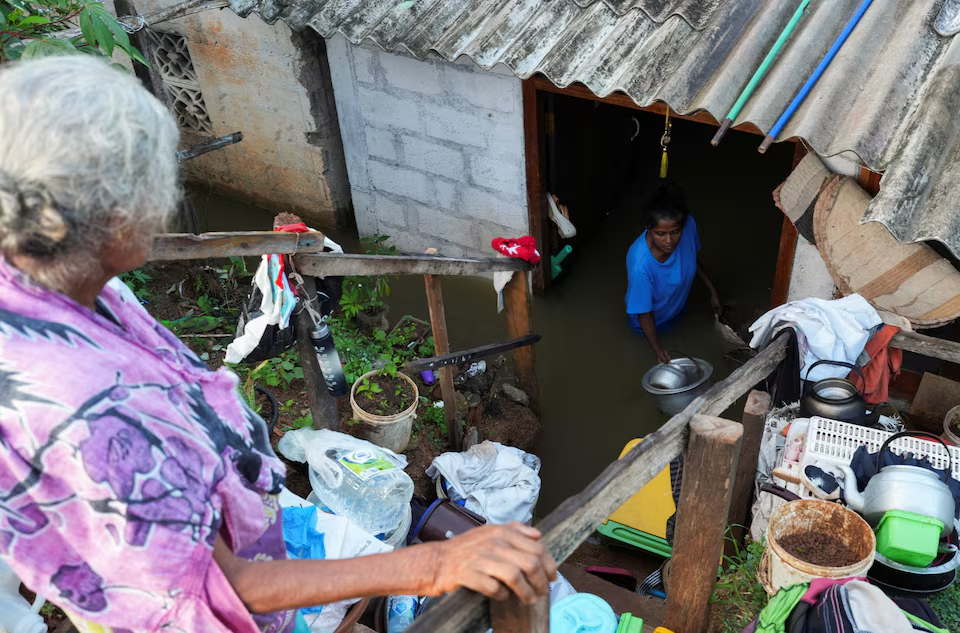
People salvage their belongings from a flooded house along the banks of Kelani River, following Cyclone Ditwah in Peliyagoda, Sri Lanka. REUTERS/Thilina Kaluthotage
The Headlines
Extreme weather has further exposed the fragility of tea landscapes with the brunt of the latest onslaught being borne by Sri Lanka following Cyclone Ditwah. We have included extended coverage of the impacts of Cyclone Ditwah below. This lethal cyclone comes fast on the heels of the devastating cloudburst in India’s Darjeeling and the Dooars in early October from which tea communities are still recovering. In Wayanad, India, Harrison Malayalam’s Sentinel Rock factory at Mundakkai has only just resumed operations after the 2024 landslide that killed dozens and displaced much of the workforce.
As THIRST has commented before, it is vital that studies are done to ensure that tea workers’ housing is positioned away from landslide danger zones and that there is a sufficiently robust infrastructure in place to ensure that they can recover quickly when hit by such disasters. People living on the poverty line risk being pushed into destitution by calamities such as this. This is not just a call to tea plantation owners and managers, but also to the governments of tea growing countries and to the global buyers of tea. Nobody should feel like the tea worker who said after Cyclone Ditwah “We do not have the essentials, nor any hope of overcoming the cyclone’s impact.”
Landslides, flooding and prolonged dry spells disrupted production in India and Sri Lanka while Kenya recorded a 4.5% decline in output in August. At the same time, sustainability initiatives, from Sri Lanka’s climate-focused programmes to Kenya’s exploration of Geographical Indication (GI) status, show how governments and industry actors are testing new pathways to protect crops, communities and supply chains.
The final months of 2025 brought significant change for tea-producing regions with India’s sweeping labour reforms setting the tone for wider debates on rights, livelihoods and governance across the sector. On 21 November, the central government implemented four new labour codes, replacing 29 older laws in the most extensive overhaul of India’s labour framework in decades. The new codes (covering wages, occupational safety, industrial relations and social security) aim to extend protections to more than 400 million workers. Supporters, including representatives from tea-growing regions, see the shift as a path to clearer rules, better welfare provisions and stronger social security. Trade unions, by contrast, have raised concerns about the potential weakening of worker safeguards and launched demonstrations in several states. These differing responses reflect the broader tension between administrative reform and lived realities for plantation communities.
Across India and Kenya, pressures on wages, governance issues and climate resilience continue to shape daily life for tea workers and smallholders. Protests linked to unpaid wages, bonus disputes and plantation closures underline the strain many communities face. Efforts to improve financial security, from digital wage systems in Malawi to new cash-advance schemes in Kenya, indicate a growing recognition that smallholders and workers remain vulnerable to volatile markets and delayed payments.
These developments show a tea sector going through a period of real change. Governments, industry bodies and workers are all trying to find steady ground, updating labour rules, protecting people’s rights and preparing for the effects of a shifting climate while keeping production going. Across this uncertainty, the need for fairer incomes and stronger safeguards is becoming clearer and THIRST will continue to track and follow these changes to support evidence-based action for tea-growing communities.
Cyclone Ditwah
Cyclone Ditwah wreaked havoc across Sri Lanka, killing at least 465 people and leaving another 366 missing, according to the Disaster Management Centre’s update. The Sri Lanka Air Force has been surveying landslide‑affected terrain and airlifting food and essentials to isolated communities as recovery efforts begin in the wake of torrential rains and mudslides that flattened roads and buried vehicles and homes. Roofs of some houses protruded from mud, while others were completely covered by soil unleashed by the cyclone’s impact on the tea‑growing hills. (France 24 02/12/2025).
The disaster has severely affected Sri Lanka’s plantation sector. Veteran planter Roshan Rajadurai has said that the tea industry anticipates a roughly 30–35 % crop drop due to unprecedented weather damage across Central Province estates and low worker turnout. He described the plantation sector as in “crisis mode,” noting that ongoing risks of landslides and communication breakdowns make accurate assessments difficult. (Daily Mirror 04/12/2025)
Roads remain damaged, the weekly tea auction was cancelled due to impassable routes, although some estates report that most workers were moved to safety before floods, with no mass casualties among staff reported. (Sunday Times 07/12/2025)
Commentators say that Sri Lanka’s fragile economic recovery will be delayed as Cyclone Ditwah’s devastation of homes, roads and vital crops pushes more families into poverty, with officials warning the bill to rebuild could soar to $7 billion… growth seen at 4.5% this year will slow to about 3% in 2026 as a result. (Reuters 09/12/2025) NB the image shown above may not be of a tea worker’s house, but illustrates the level of destruction the cyclone has brought to people’s homes generally.
Climate and political activist Melani Gunathilaka, speaking from Sri Lanka’s hill country says bodies remain under the mud and that telecommunications and power lines have collapsed, leaving some communities unable to call for help or withdraw money, while local shops were now running out of food. She explains that decades of deforestation in the central highlands and large development projects that ignored the island’s steep terrain have made landslides far more dangerous, particularly for tea-estate workers living in fragile housing on unstable slopes. The Independent 04/12/2025
One tea worker said: “It is all gone. We know the rolling hills to be unpredictable, and from time to time, there have been mudslides and homes destroyed by the rainfall. Now the roads are impassable. We do not have the essentials, nor any hope of overcoming the cyclone’s impact,” Al Jazeera 10/1/2025
The Cyclone also caused deaths and destruction in Indonesia, Thailand and Malaysia, but we are not aware of impacts on tea communities there. (Independent 04/12/2025)
Other climate news
Tea-growing communities faced severe climate shocks in late 2025 with landslides, flooding and erratic weather causing significant disruption across India, Sri Lanka and Kenya. Sri Lanka was hit the hardest at the end of November by severe floods and landslides caused by Cyclone Ditwah killing 40 people, injuring 10 and leaving 21 missing in central tea-growing regions, highlighting the human and economic toll of extreme weather (The Straits Times, 27/11/2025).
In Wayanad, India, Harrison Malayalam’s Sentinel Rock factory at Mundakkai resumed operations for the first time since the 2024 landslide that killed dozens and displaced much of the workforce, leaving only two original employees to return (New India Express, 17/11/2025). Following the devastating cloudburst in Darjeeling and the Dooars in early October (World Tea News, 19/11/2025)
In Kenya, prolonged dry spells and reduced rainfall contributed to a 4.5% drop in tea production in August 2025, down to 36.87 million kgs from 38.6 million in August 2024 (Food Business MEA, 21/11/2025). The Tea Board cited ongoing climatic stress across major growing regions as the main driver of declining yields.
Industry stakeholders are responding with climate adaptation and sustainability initiatives. Sri Lanka’s Talawakelle Tea Estates PLC has implemented renewable energy, water stewardship and low-carbon strategies and was named Patron of the Climate Emergency Task Force of the UN Global Compact Network (Ada Derana, 27/11/2025).
Worker protests and plantation closures signal growing pressure on tea regions
Tea-growing regions across India faced a difficult end to 2025 as closures, wage disputes and protests exposed persistent challenges in management, worker rights and livelihoods. In what has become a worryingly familiar story, industrial unrest intensified across India. Subarnapur workers in West Bengal blocked a state highway demanding wages and bonuses, ending their protest only after officials promised renewed talks (Millennium Post, 12/11/2025). Rival unions in Alipurduar joined forces to press for reopening Dalshingpara or state support under Financial Assistance to Workers of Locked Out Industries (FAWLOI), a rare cross-party solidarity (Telegraph India, 05/11/2025). India’s West Bengal, Kohinoor tea plantation abruptly shut after the manager left, leaving 888 workers unpaid and prompting some to seek casual work in neighbouring plantations (Telegraph India, 04/11/2025). Chinchula is set to reopen after a two-month closure over a 20% Puja bonus dispute (Telegraph India, 17/11/2025).
In India’s Assam, wage-arrears strikes hit Bimalapur (The Sentinel, 09/11/2025) and Cachar plantations (Times of India, 31/10/2025) while Jorhat saw demonstrations for wage hikes, land rights and welfare commitments (The Sentinel, 13/11/2025). Silchar’s Adivasi communities pressed for Scheduled Tribe (ST) status and wage parity (Sentinel Assam, 22/11/2025). Hatijan workers protested dismissals despite prior agreements (Sentinel Assam, 14/11/2025). In India’s Tripura, Ramdurlavpur employees opposed alleged land diversion and wage neglect (Tripura Info, 15/11/2025). In the Dooars, Dalsinghpara workers demanded state aid while women at Bagrakot staged a hunger strike, demanding immediate payment of their due wages (Telegraph India, 25/11/2025).
Efforts to strengthen tea communities and ensure fair wages have gained momentum worldwide. In India, the Trinamool Cha Bagan Sramik Union (TCBSU) led door-to-door outreach and set up help desks in Alipurduar tea plantations to assist workers with the Election Commission’s special intensive revision process (Telegraph India, 11/11/2025). Following devastating floods, 2,421 workers at Bamandanga and Subhashini plantations began receiving monthly financial aid of Rs 1,500 under the FAWLOI scheme (Kalimpong News, 09/11/2025).
Smallholder tea farmers seek fair wages and financial security
Smallholder tea farmers in Kenya remain financially vulnerable, despite tea sustaining nearly one million farmers, supporting 6.5 million people and contributing over KES 200 billion annually. Smallholders in Bomet warned of a green-leaf boycott unless (Kenya Tea Development Agency) KTDA governance and returns are addressed (Sacco Review, 06/11/2025).
Safaricom’s DigiFarm launched the Jipange Cash Advance, in partnership with Access Bank and local tea factories, to provide early access to funds and bridge short-term gaps caused by delayed payouts (TechAfrica News, 27/11/2025). Highlighting systemic inequities, Father Ambrose Kimutai, parish priest in Bomet County, warned that government structures, often prevent farmers from earning fair income and called for reforms to ensure smallholders benefit from the wealth they produce (Agencia Fidez, 31/10/2025).
Sri Lanka proposed a wage increase for workers, raising daily pay from Rs 1,350 to 1,550 with a Rs 200 attendance incentive for government and Regional Plantation Companies (RPC) plantations, although smallholders remain largely excluded (Economy Next, 07/11/2025; Sunday Times, 23/11/2025; The Morning, 26/11/2025). Over 1,000 tea workers protested for fair wages and dignified conditions (UCA News, 18/11/2025).
In Malawi, the Tea Association launched a digitised wage system with United Nations Development Programme (UNDP) support to promote financial inclusion and protect workers from predatory lending (The Daily Times, 25/11/2025). Bangladesh’s Moulvi Tea Estate signed a Memorandum of Understanding with the London Tea Exchange to implement the global fair pay charter and improve local livelihoods (New Age, 14/11/2025).
The Assam Nationalist Youth Student Council called for more effective support for small tea growers, advocating subsidised fertilisers and pesticides instead of food staples (Assam Tribune, 11/11/2025).
Urgent action needed to protect tea workers’ health and safety
Workers continue to face serious health and safety risks, highlighting the need for stronger protections and support. In Sri Lanka, Kitnan Wijejakumar, a 49-year-old worker at the Maussakele Tea Factory, tragically died after becoming trapped in a tea processing machine. Investigations revealed the machine lacked all three mandated safety guards, which would have prevented the fatal accident (Daily Mirror, 05/11/2025; World Socialist Website, 09/11/2025).
In India, migrant worker Devi, aged 60, was mauled by a bear while plucking tea leaves at a Kothagiri plantation. She sustained injuries to her left hand and leg and was rushed to a government hospital for treatment (NDTV, 15/11/2025). Such incidents highlight the unpredictable hazards workers face in both industrial and plantation settings.
Interventions are emerging alongside these challenges. In Kenya, the KTDA Foundation launched a comprehensive medical camp in Nyeri County, targeting tea farmers from Gathuthi Tea Factory and surrounding areas. The initiative provides healthcare for conditions often overlooked, including high blood pressure, diabetes, respiratory issues and musculoskeletal pain linked to long days in the fields (Dawan Africa, 26/11/2025).
Building security and opportunity across tea-growing regions
Protection and opportunity for vulnerable groups in tea-growing regions came into sharper focus this month. In Kenya, the Central Organization of Trade Unions (COTU) renewed its call for tougher laws to curb child labour, stressing that poverty, poor enforcement and limited access to education continue to push children into hazardous agricultural work. New efforts shaped with ILO input are concentrating on Kisii, Kericho, Meru and Kirinyaga counties (Standard Media, 31/10/2025).
Women’s rights and working conditions were a focus in Sri Lanka, where Prime Minister Harini Amarasuriya called for greater recognition and support for the female workforce that makes up over 60% of the industry. She noted ongoing safety risks, inadequate housing and the lack of childcare for plantation communities (Newswire, 10/11/2025). In Bangladesh, worker Apola Kumari described the strain of surviving on Tk 178 a day and the absence of menstrual hygiene facilities. Officials acknowledged the gap between policy and practice, noting that the new Mother and Children Benefit Program aims to reach remote plantations (The Daily Star, 31/10/2025).
In India, the Assam Chah Mazdoor Sangha awarded grants to 163 students from tea worker families as part of its annual educational programme (India Today, 10/11/2025).
Governance and labour reform take centre stage in the tea sector
India’s tea sector is at the centre of a major governance shift following the implementation of four new labour codes on 21 November 2025. The central government has replaced 29 older laws with streamlined legislation covering wages, occupational safety, industrial relations and social security, aiming to extend protections to over 400 million workers (The Daily Jagran, 22/11/2025). Proponents, including Darjeeling MP Raju Bista, argue the reforms will improve transparency, raise wages and enhance facilities for tea plantation employees in north Bengal (Kalimpong News, 22/11/2025). Opposition voices, however, have described the rollout as a “deceptive fraud,” with unions staging protests in Bhubaneswar to contest potential erosion of worker rights (Nikkei Asia, 23/11/2025).
Governance reforms in Kenya are also unfolding. The Tea Board of Kenya is conducting a feasibility study, supported by CIRAD and the French Development Agency, to explore whether designated tea production zones could benefit from Geographical Indication (GI) status, positioning Kenyan tea as a premium export product (Ecofin Agency, 17/11/2025). At the same time, the National Assembly has launched a detailed review of bonus disparities among farmers in Rift Valley regions, responding to concerns over uneven payouts and representation in sector decision-making (Eastleigh Voice, 19/11/2025).
Additional initiatives include broader community governance measures. The Trinamool Cha Bagan Sramik Union in West Bengal has established help desks across 64 plantations to assist migrant tea workers during electoral roll revisions (Milennium Post, 05/11/2025) while India’s Tea Board urges adoption of stricter food safety standards to protect both workers and plantation ecosystems (Times of India, 8/11/2025).
Global tea industry faces pricing pressures and calls for sustainable growth
Tea producers across Asia and Africa are contending with a complex landscape of market volatility, sustainability challenges and pricing pressures. In Vietnam, reliance on chemical fertilizers and pesticides is degrading soil and affecting both tea quality and worker health. Experts urge diversification, deep processing and a shift to organic cultivation to build high-value exports and sustainable livelihoods (The Investor, 10/11/2025). Tho Binh Commune in Thanh Hoa Province exemplifies the potential with tea now generating hundreds of millions of dong annually for local households (Vietnam Net, 25/11/2025).
Nepali orthodox tea growers face burdensome organic certification costs, paying Rs 700,000-800,000 annually to foreign agencies to maintain access to international markets (Rising Nepal Daily, 27/11/2025). In Pakistan, experts highlight the untapped potential for commercial tea cultivation with profitability reaching up to Rs 1 million per acre, yet only a fraction of suitable land is under cultivation (Lead Pakistan, 24/11/2025).
Price pressures are acute in India, where smallholder tea farmers demand a minimum support price (MSP) for green leaves to protect livelihoods from market volatility. Organisations, including AIKS and NECSTG, have petitioned both state and national governments for a dedicated Tea Ministry and MSP framework (India Today NE, 13/11/2025; Times of India, 13/11/2025; Sentinel Assam, 15/11/2025). At the Kolkata Tea Auction, Darjeeling lots (just 5% of volume) accounted for 40% of turnover, driven by quality and ethical certification (TCO News, 02/11/2025).
In Uganda, plummeting tea prices, from USD 0.19 to USD 0.027 per kg, have forced growers to abandon plantations, prompting government loan schemes for large-scale farmers (Nile Post, 26/11/2025). Meanwhile, US tariff exemptions for coffee and tea exports offer relief to Indian exporters (Money Control, 19/11/2025).
Share this update
Sign up for our monthly newsletter to stay in the know about human rights in the tea sector
Each issue of our newsletter includes:

A summary of the latest tea sector news

Upcoming THIRST events

THIRST news and updates

New reports and resources from our Knowledge Hub
Latest news, views and events
View all Upcoming Event
 Tea News Update
THIRST Tea News Update – February 2026
Extremes heat and cold affect tea workers’ health; land-rights and wage protests persist across S Asia. Major shifts in Kenyan tea policy.
Tea News Update 
January News Update 2026
This month’s update highlights deep structural challenges facing tea workers and producers across South Asia and East Africa, alongside emerging reforms, climate…