
THIRST Tea News Update
May / June 2024
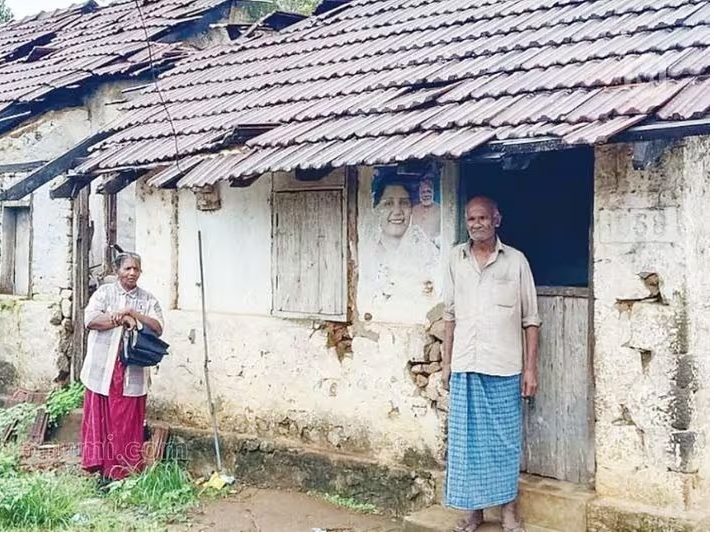
(Mathrumbi) Workers fear dilapidated housing will not withstand monsoon
Highlights: Browns now one of world’s biggest tea companies; Kenyan communities push back for land rights. London Tea Exchange launches Fair Pay Charter. Climate impacts hit tea production, wages and cause landslides, heavy rain destroying houses.
Help THIRST to help you
Please consider making a donation to help us continue to help you. To be able to continue providing these updates, we need your support – a shortfall in funds meant that we were not able to bring you these updates for the last few months. Your contribution will also enable us to continue maintaining our unique Knowledge Hub of resources on human rights in the tea sector, convening roundtable discussions on topical issues, and conducting vital research into human rights in the tea sector, such as our ongoing Human Rights Impact Assessment of the tea sector. Thank you.
THIRST News
Webinar: HRIA & risks for women in tea
17th June, 10 am EST, 3pm BST, 4pm CET
THIRST CEO, Sabita Banerji, has been invited by Aim-Progress to give a webinar on the lessons we have learned from our HRIA of the tea sector, with a particular focus on the risks faced by the sector’s women workers. They are the backbone of the industry and yet remain the lowest paid and least empowered, at constant risk of sexual exploitation and abuse. What practical steps can be taken to protect and empower them?
For more information, contact Nora Wolters at nora.wolters@aim-progress.com
Update on tea sector HRIA
CONSULTATIONS WITH KENYAN TEA COMMUNITIES
Following the publication late last year of our ‘Analysis of the root causes of human rights breaches’ , plans are now underway to begin consultations with the key stakeholder groups in the tea sector, beginning with tea workers and farmers in Kenya. THIRST will work with local partners to present the findings of the HRIA so far to workers, farmers, producers, brands and retailers and will facilitate discussion on the future of the tea industry. This will help to build a composite picture of the various perspectives within the sector, what they need and how their varying needs impact on each other. Together we can then build a human rights ‘highway map’ for the global tea industry, including both new and existing action plans by the various stakeholders.
Contact THIRST to discuss how you and your organisation can be involved.
UPCOMING REPORT:
‘Alternative Approaches in the tea sector – can non-traditional business models and trading systems improve fulfilment of tea workers’ and farmers’ human rights?’
Up to now, THIRST has been focusing on the human rights problems in the tea sector. We are delighted that we are now on the verge of publishing a report on some potential solutions. Across the sector, there are numerous examples of innovations in purchasing practices, business models, employment models and trading systems. THIRST has put together a selection of case studies from India, Sri Lanka, Kenya and Tanzania to share with the industry for inspiration and information. Some of the case studies offer ‘deep dives’ exploring how well they are working, their challenges and the opportunities for replication. Once published, we will keep adding to the collection as new case studies emerge. The initial report (which has been made possible by a donation from Tesco), will be published on THIRST’s Knowledge Hub by the end of this month.
Did you know that there are over 130 publications on THIRST’s Knowledge Hub covering a wide range of issues relating to the tea sector including climate change, gender equity, health, housing, wages and much more?
Zahra Afshar of Ahmad Tea says “The research papers resources pulled together by THIRST and resources found on their website have been so helpful for my own learning as Head of legal, human rights and sustainability at an international tea company. Many of my colleagues in sourcing countries also refer to the website for updates and analysis which they have found incredibly helpful too”.
MAY – JUNE TEA NEWS SUMMARY
Browns Investments are now one of the biggest tea companies in the world having acquired Lipton’s estates in Kenya, Rwanda and Tanzania – adding to their ownership of Finlay’s estates in Sri Lanka and Kenya. A consortium of local farmers, supported by a UK management firm is pushing for a share of the estates as part of a bid to regain ancestral land taken by British colonialists. India has seen a continuation of agitation by tea workers over late payment of wages, and in Sri Lanka plantations are pushing against a new mandated minimum wage that is nearly double the current wage. Plantations say they cannot pay this without getting better prices for their tea. A UN body and the London Tea Exchange aim to raise 3 million people a year out of poverty in the tea sector by encouraging governments and companies to adopt the Fair Pay Charter. Climate impacts are being felt in many ways across the sector; producing new pests, reducing crop volumes which is impacting on workers’ income, causing landslides and destroying tea workers’ dilapidated housing. The Kenyan government is encouraging organic tea farming and the Bangladeshi government has given awards to factories with high environmental and labour standards. Tea workers have been killed and injured in landslides and leopard attacks, highlighting the dangers of working in tea. Women and children are being trafficked from tea estates in North India, while Sri Lankan tea workers are marching to gain recognition of their contribution to the country’s economy and of the hardships their ancestors faced in being trafficked from India. And the good news is that training is underway in India to bring more local people into tea management, and Kenya is accelerating action on the elimination of child labour.
MAY – JUNE TEA NEWS IN DETAIL
The big Browns takeover
The big news this quarter has been Browns Investments’ acquisition of Lipton Tea and Infusion’s tea estates in Kenya, Rwanda and Tanzania. Combined with Browns’ recent acquisitions of James Finlay Kenya (and before that Finlays’ estates in Sri Lanka), this has made the Sri Lankan company one of the biggest tea companies in the world, with a processing capacity of 87 million kg of tea a year. (Business Daily Africa, May 7)
Tea communities’ land disputes
The deal has, however, met with some resistance in Kenya. Despite Browns committing to sharing 15% of the company’s assets with local communities through a Community Welfare Trust (Business Daily Africa, May 7), a consortium of indigenous farmer cooperatives had made their own push to acquire Lipton-owned estates.
Supported by a UK-based management firm, the consortium sees a return to Kenyan ownership of the estates as the rightful return of ancestral land that was taken by the British when tea plantations were first established in the country. (Kenyan Wall Street, May 7). They plan to file an objection with the Kenyan Competition Authority & UN Human Rights Council over alleged violations of requirements of free, prior and informed consent from communities on use and transfer of their ancestral lands (Semafor, June 4). One Kenyan resident has filed a petition asking that the land lease agreements of multinational tea companies in the area, including Browns, be investigated. (Standard Media, April 15).
Land ownership is also causing difficulties for tea plantation workers in India; the Bombay Burmah Trading Corporation has been ordered to hand the land of one of its estates over to the forest department in 2028 when its lease ends. It has introduced a voluntary retirement scheme for workers, those who accept will have to leave the estate where their families have lived for five generations. (Times of India, May 30). The Tamil Nadu Congress Party has demanded that tea workers not be evicted, and that the state government make provisions for the workers, claiming that “Evicting thousands of workers goes against workers’ rights”. (The Hindu, May 25)
Fight for fair and timely wages and payments
The demand for better wages paid on time remains a constant issue across the sector. This Labour Day (May 1) saw wage protests from a number of tea workers, including West Bengal in India, as nearly 1,000 workers demanded payment of their outstanding wages, some of which have been pending for over a year. (Telegraph India, June 8). In Tamil Nadu, South India, too over 1000 tea workers protested against late payment of wages and also demanded improved working conditions, maintenance of accommodation, better health facilities within the estates, and education for their children. The police were called in by the management. (WSWS, May 3)
In response to similar demands over recent years, the Sri Lankan government has announced a minimum wage of 1700 rupees for tea workers; several Sri Lankan companies subsequently traded lower on the stock market. (Economy Next, May 2). The government has threatened to take over the running of estates which do not pay this new minimum wage, but some estates claim that they are unable to do so. (Economy Next, May 27). They have filed a request to suspend the order, but the Court of Appeal has refused to acquiesce, setting June 26 as the date the order will be reviewed. (Daily News, June 4).
One response to this ongoing issue has been the launch by the UN Institute for Training and Research and the London Tea Exchange of the Fair Pay Foundation. The launch recognises “the urgent need for collaborative and cross-cutting action to improve the lives of the 25 million people working in the Tea Industry, whose conditions are commonly described as ‘alarming’.” It will push for fair wages for 25 million workers in the tea industry, raising 3 million out of poverty every year, principally through encouraging the adoption of the Fair Pay Charter by governments and companies. A centre will be set up in Bangladesh and a model tea plantation is being worked on. (Mirage News, May 31).
Farmers, too, have been experiencing payment delays; Kenyan farmers say they are in severe financial problems as a result of non-payment of payments worth over 100 million KES owed by the Korara Tea Estate. (Citizen TV Kenya, May 8).
Tea prices – spiking, yet stagnant?
Kenyan tea worth over 2.3 billion Kenyan shillings was taken off the market after the KTDA reset a reserve price at auction. This resulted in traders rejecting millions of kgs of tea whose quality did not match the minimum price. As a result tea reserves at KTDA’s warehouses built up to 70 million kilos. The agency has now released old tea stocks into the market at prices below the government-mandated minimum, aiming to alleviate warehouse congestion and boost liquidity. (All Africa, April 16). This addition to the stock of lower quality tea on the global market will help sustain the longstanding stagnation of tea prices.
Yet one report holds that average global tea prices have increased by 50% in the last year, around 34% in the last three months alone due to rising production costs, not least because of the impacts of the climate crisis. (Just Drinks, May 31).
Climate crisis: impacts and innovations
Efforts to meet wage demands are exacerbated by the ongoing impact of the climate crisis, which remains a looming problem across all tea-growing regions. For example, sparse rainfall and a heat wave across North Bengal, India, have dried tea leaves on the bush leading to production losses of 35% to 40%. (Swachh India, May 2). In addition to increased heat and lack of rainfall, tea yields are also being hit by insect attacks in Bangladesh (New Age, April 28) and West Bengal, India (Times of India, April 10). Since tea workers are paid according to how much they pluck, their incomes are affected.
Provisional statistics from the Tea Board of India show that tea production has fallen by almost 40 million kg in 2023-24 season compared to the previous year, primarily due to climate impacts. (Business World, May 29). Low production volumes is impacting on tea workers’ earnings; India’s National Union of Plantation Workers, has requested work under Central government employment schemes for tea workers who are currently not able to work for six days a week plucking tea because of low yield. (Telegraph India, June 7)
The Tea Board of Kenya has urged tea growers to shift to growing organic tea as demand for traditional tea is shrinking across most markets. Tea market players believe this will revolutionise the tea industry in Kenya. (Kenya News, May 30). Although organic tea production tends to reduce volumes, it is one step towards mitigating climate impacts.
Extreme weather is also putting tea workers’ lives directly in danger. Monsoon in the southern Indian state of Kerala has created havoc in the lives of tea workers, including landslides and house collapses. (New India Express, June 3). Many workers feel that their living quarters will not survive the monsoon as they are located in vulnerable locations, claiming that promises to repair and upgrade their homes remain unfulfilled. (Mathrumbi News, May 26)
Attempts are being made to address the environmental and employment effects of the climate crisis on tea. Three tea estates of the Ispahani group of Bangladesh received the Green Factory 2023 award from the Bangladesh government for their commitment to providing workers and environment-friendly working environment. (The Financial Express, April 29).
Impending disaster in Darjeeling?
The various challenges of the tea industry in Darjeeling, North Bengal are putting the survival of the tea sector there at risk. Weather conditions, the age of the tea bushes and the shift to organic production have all led to a fall in yield according to those in the industry. Tea from Nepal being sold as counterfeit Darjeeling, the lack of interest from the younger generation in tea and the low wages have compounded the problems. Tea workers are looking for work outside the plantations (leading to labour shortages), and tea plantations are branching into the growing tourism industry, renovating plantation managers’ bungalows from the British colonial era for tourists. (The Print, April 24). Many Darjeeling tea estates hacve closed already, leaving workers destitute. Urgent action is required to secure the livelihoods of the thousands who rely on tea production in the region.
Trafficking, exploitation, injuries and death – old and new
Lack of protection from natural hazards of working on tea plantations has led to further injuries and another death. A woman tea worker was killed and three others injured by a landslide in Bangladesh. (Observer Bangladesh , June 2), and two tea garden workers in Assam, India, were seriously injured in a leopard attack. (India Today, May 4).
Trafficking and exploitation remain big problems in the tea plantations of North Bengal, India. There have been reports that women and children from these areas are kidnapped or sold to agents who then sell them on for a life of abuse. (Maktoob Media, April 29).
The Malayaiha community of Tamils in Sri Lanka were brought from India by the British to work in tea, suffering terrible hardships in the process and making significant sacrifices. They are on a mission to gain recognition for their contribution to Sri Lankan society and especially for their primary role in the tea industry. (Eurasia Review, June 4)
And the good news is…
In Northeast India, the Tripura Tea Development Corporation has tied up with Agartala University to offer diplomas courses in tea production management in order to increase the input of local talent in management of the Tripura tea industry. (India Today, May 31). Meanwhile, SEWA and Dibrugarh University held a training programme for small tea growers in Assam (including a virtual discussion with small tea growers in Kerala), including sessions on brand building and marketing. (Sentinel Assam, May 29)
Kenya has joined the Acceleration Action on Elimination of Child Labour Africa Project, and the government has partnered with the ILO, to work towards removing child labour in a number of industries in the country, including tea. (Kenya News, April 12)
TO GET THIS NEWSLETTER DIRECT TO YOUR INBOX SUBSCRIBE USING THE FORM AT THE BOTTOM OF THE PAGE.
Share this update
Sign up for our monthly newsletter to stay in the know about human rights in the tea sector
Each issue of our newsletter includes:

A summary of the latest tea sector news

Upcoming THIRST events

THIRST news and updates

New reports and resources from our Knowledge Hub
Latest news, views and events
View all Upcoming Event

 Tea News Update

Tea news November 2026
Bonus unrest season returns; small but transformative climate adaptations adopted; GBVH persists alongside studies; real and continued danger to tea workers’ lives.
 Blog post
Guest blog: Fewer toolkits, better behaviour
Michael Pennant-Jones, Director of T-Evolve, questions the tea industry’s reliance on audits and compliance systems, arguing that better leadership, respect and workplace…