
Tea has an image problem…
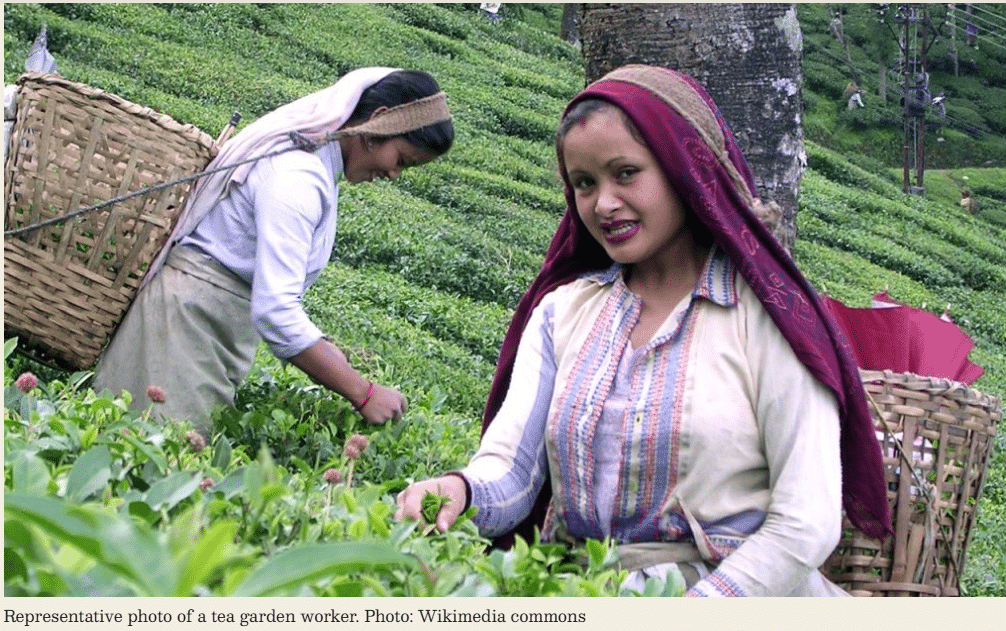
A media outlet captions this Wikimedia image as “Representative photo of a tea garden worker”.
Tea has an image problem … and it’s time we looked closer
It’s a familiar scene. Women in bright clothing, headscarves loosely tied back, standing in rows across green hillsides. Some smile; others focus on the careful work of plucking leaves by hand. It feels calm, natural and almost timeless.
You see this image everywhere… on packaging, in travel brochures, in sustainability reports, in stock images and across the media. For something as widely consumed as tea, it’s a powerful and recognisable picture.
The longer you sit with it, the more noticeable the gaps become.
At THIRST, this is something we’ve always been conscious of. We choose images and stories that reflect the fuller picture, showing people not just at work but as individuals with lives beyond the field, not defined solely as “pluckers.” It’s a small but crucial step towards shifting how the sector is seen.
On the surface, the image tells consumers exactly what they want to hear. Tradition, care and a close connection to the land. For brands, it does much of the marketing work for them.
What is missing from that picture is just as important as what is shown.
The work is rarely as calm as it appears. Tea plucking is physically demanding, often carried out for long hours in difficult conditions. Wages in many tea producing regions remain low and workers have limited power to influence the terms of their employment.
The picture also obscures who holds value in the supply chain. The workers in the fields are presented as the face of tea yet they’re often the least visible when it comes to decision making, pricing and long-term security.
It also shapes how tea is understood. The image presents tea as simple and unchanging, rooted in tradition and harmony. That idea is appealing but it flattens the reality of a global industry that is complex, uneven and under pressure.
Looking closer does not mean rejecting the image entirely. It means asking harder questions about what it represents, who it serves and what stories are not being told.
Looking closer does not mean rejecting the image entirely. It means asking harder questions about what it represents, who it serves and what stories are not being told.
The picture of women plucking tea has a long history.
It has been shaped over more than a century through colonial photography, advertising and later branding.
Art historian Leila Anne Harris’s essay Two Leaves and a Bud: Tea and the Body Through a Colonial Lens captures this clearly. Early images of tea plantations in places like Sri Lanka were carefully composed to appear “picturesque.” Women were placed at the centre of the frame, working among abundant green leaves with little sense of the wider plantation system around them.
This was not just documentation. It presented tea production as ordered, beautiful and untroubled. Harder realities such as low pay, poor labour conditions, gender-based violence and the structure of plantation economies were left out of view.
People working across the tea sector know how varied it is. Smallholder tea farmers working tirelessly, large plantations operating at scale, factories running to tight margins and sustainability teams trying to navigate all of this across different contexts in an increasingly challenging commercial environment.
There are also pressures that do not show up in a photo.
Climate uncertainty, fluctuating prices and the ongoing question of who captures value along the supply chain.
The hillside picture is not false, but it simplifies things to the point where most of the system disappears.
There is also a more uncomfortable layer in how labour is portrayed. Women have long been the face of tea production in imagery, particularly as tea pluckers. That visibility does not translate into power. In many contexts, women remain concentrated in the lowest paid roles with limited access to decision making, land ownership or economic security.
…visibility does not translate into power. In many contexts, women remain concentrated in the lowest paid roles with limited access to decision making, land ownership or economic security.
As Two Leaves and a Bud highlights, the “tea plucker” becomes less of a person and more of a symbol. Calm composed and untouched by the physical demands of the work. These images present workers as stereotypes, repeated and labelled, rather than as individuals with their own identities and lived experiences.
What often gets lost is everything else that makes up a person’s life. The women in these pictures are not shown as people with identities, homes, families, worries, joys or ambitions. They’re reduced to a single role. As the sector looks towards mechanisation in some regions, there is a risk that this narrow portrayal reinforces the idea that the mechanical process of their work is all they are.
That same reduction carries through into how tea is shown more widely. This pattern is especially visible in mainstream media coverage. Regardless of the story, the same image is used again and again. For example, the image used to illustrate this blog is from an article about the importance of Assam’s tea community to India’s upcoming election. Like this one, these images are often pulled from a stock library and described as “representative.” It’s worth asking: representative of what, exactly?
the same image is used again and again, often pulled from a stock library and described as “representative.” It’s worth asking: representative of what, exactly?
A small number of recent films, including Cha Gorom and Kikuyu Land, attempt to move beyond the familiar image and spend more time with the realities behind it. They reflect a growing interest in looking past the surface, even if that shift is still limited.
We need to see a change in how tea is described and shown. The focus needs to move away from surface-level imagery and towards the people, conditions and systems that shape the industry. This matters because the way tea is presented shapes how it’s understood. That understanding feeds into policy discussions and industry decisions. A simplified picture can lead to simplified, and sometimes ineffective, responses.
The hillside image does not need to disappear; it needs context and a fuller view.
That means recognising the system behind it. Smallholder plots, factory floors, the journey from farm to market, pricing pressures and long-term environmental risk – and the homes and community spaces of the people that work there. It includes progress in some areas and ongoing challenges in others.
The tea sector is more complex, more uneven and more human than the image suggests. Looking closer is not only about changing perception but also about changing outcomes. A more honest picture helps create the conditions for better decisions across the sector, including systems where workers and farmers are better represented and their realities more clearly understood.
There is a role here for all of us, especially those who shape how tea is seen. Media, brands and organisations have the power to move beyond familiar scenes and tell fuller and more human stories.
If we want a more sustainable and fair tea sector, we must start by showing it as it really is. Not just a landscape or a role but people with full and complex lives.
If we want a more sustainable and fair tea sector, we must start by showing it as it really is. Not just a landscape or a role but people with full and complex lives.
By Jacqueline Amankwah – Head of Communications, THIRST
Share this article
Sign up for our monthly newsletter to stay in the know about human rights in the tea sector
Latest news, views and events
View all Upcoming Event
 THIRST news
THIRST News August 2026
THIRST seeks new Chair; Darjeeling Tea Multi Stakeholder Roundtable 27 Nov; Behind the Brew Update; Next Circle of Tea meeting 29 Sept
 Tea News Update
August Tea News Update 2026
Tea industry pivots from volumes to value amid price, cost and climate shocks; efforts to tackle, mitigate climate impacts; Indian tea company…