
THIRST Tea News Update
May 2026
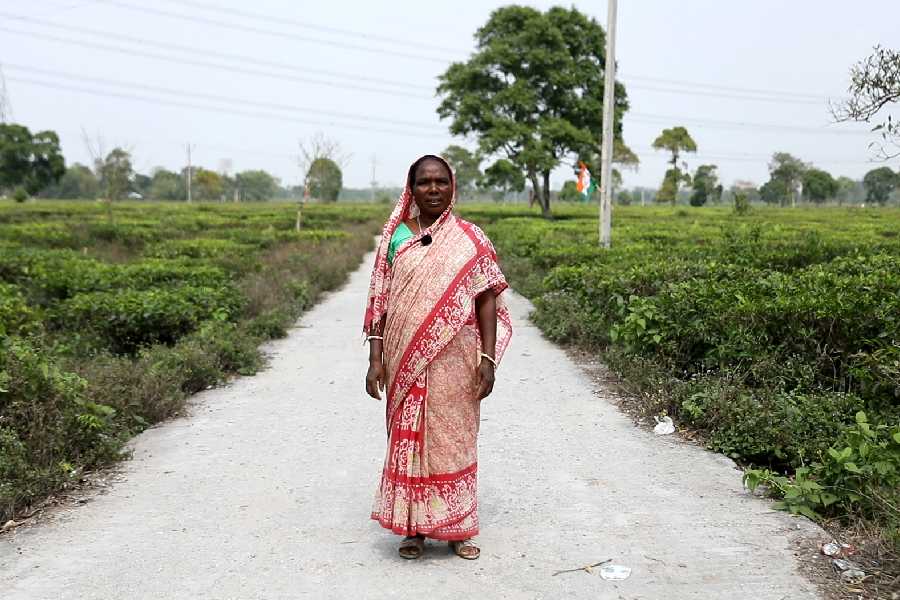
Devi Lohar standing amidst the abandoned tea garden. Photo: Ribhu Chatterjee The Telegraph
The headlines
Governments across major tea-producing countries are introducing reforms and support measures to tackle mounting economic, social and environmental pressures facing the tea sector. Kenya is pursuing reforms to improve transparency in tea pricing and allow more direct sales outside the Mombasa auction system, while Uganda is seeking financial support and fertiliser subsidies to revive factories affected by years of weak prices and global instability. Bangladesh has proposed a major sanitation and water project for tea workers, Sri Lanka introduced additional fertiliser subsidies for smallholders, and India tightened import testing rules for tea entering the country. At the same time, concerns remain over poor implementation of support schemes, delayed payments and insufficient assistance for growers facing rising costs.
Despite these interventions, tea workers and smallholders continue to face low incomes, labour unrest and worsening living conditions. Workers in India’s Dooars and Assam regions reported irregular wages, estate closures and migration in search of work, while Bangladeshi workers raised concerns over unpaid provident fund contributions and healthcare shortages following the closure of a major plantation hospital. Unions in India and Bangladesh also intensified protests over labour rights and representation.
Climate change and market instability are compounding these pressures. Darjeeling producers warned of erratic rainfall and landslides damaging production, while conflict in West Asia disrupted Kenyan tea exports. In response, researchers and farmers are expanding agroforestry, natural farming and crop diversification projects, while Kenya develops a low-carbon tea certification system and China introduces robotics to support harvesting in mountainous plantations.
Election results and violence in major Indian tea regions
India’s ruling right-wing, Hindu party, the Bharatiya Janata Party (BJP), ousted the Trinamool Congress from 15 years of power in West Bengal and was re-elected in Assam. In Kerala, the communist Left Democratic Front (LDF) was defeated after a decade in power by the Congress-led United Democratic Front (UDF).
The election campaigns placed tea-growing regions and plantation workers at the centre of political debate. In Assam, tea plantation communities — which influence more than 35 constituencies — played a major role in the BJP’s electoral success after campaigns focused heavily on wage increases, land rights and welfare schemes for tea workers (Business Standard, 6/4/2026; NDTV, 27/3/2026; Times of India, 5/5/2026).
In the run-up to the elections, the outgoing West Bengal government’s proposal to allow 30% of tea garden land to be diverted for other uses, particularly tourism, highlighted widening inequalities between estate tourism development and declining worker livelihoods (Telegraph India, 18/4/2026). Post-election tensions and violence underscored the state’s increasingly polarised political climate (Times of India, 6/5/2026; Reuters, 7/5/2026; The Guardian, 6/5/2026).
Workers across Assam and the West Bengal had continued to reported irregular wages, shrinking employment opportunities and deteriorating welfare services ahead of elections. In West Bengal, tea unions escalated disputes to the International Labour Organisation, alleging systemic failures in enforcing labour laws and protecting worker rights (Business World, 3/4/2026). Workers in the Dooars described irregular wages, deteriorating housing, closed hospitals and increasing migration as younger generations leave tea estates in search of work elsewhere (Times of India, 23/4/2026). Retired workers also reported that gratuity and pension payments were insufficient to sustain families, forcing many to continue working after retirement (Telegraph India, 28/4/2026). In Assam, workers staged demonstrations demanding fair wages, workplace safety and improved labour protections (Sentinel Assam29/4/2026).
It remains to be seen if the new governments will fulfil their promises to bring positive change for these long-suffering and often let down tea plantation and tea farming communities.
Such problems are not confined to India; in neighbouring Bangladesh, reports indicate that at least 58 tea gardens have accumulated provident fund arrears after owners allegedly failed to deposit deductions taken from worker salaries into official accounts, leaving many workers facing financial insecurity (Views Bangladesh, 15/4/2026). Concern also grew over the tea workers’ union operating for eight years without elections, weakening worker representation (Daily Star, 1/5/2026).
Governments taking measures to tackle tea challenges
Several tea-producing countries are pursuing reforms aimed at improving transparency, pricing and market access. In Kenya, government reforms are targeting opaque costs and price-setting practices within the tea auction system, with farmer groups calling for stronger oversight and direct representation (Streamline, 3/4/2026). Kenya’s proposed Tea (Amendment) Bill would allow factories to negotiate directly with buyers instead of relying solely on the Mombasa Tea Auction (The Star, 13/4/2026). Meanwhile, community groups in Kenya have renewed demands for multinational tea estates to return land to local ownership. Leaders from the Kipsigis community argued that land held under long-term leases was historically community land and should revert to local residents once lease periods expire (The Standard, 24/4/2026).
Uganda’s Tea Association also renewed calls for government support and structural reforms after years of falling prices and factory closures linked to global market disruptions (Monitor, 11/4/2026). Meanwhile, India introduced mandatory testing of all imported tea consignments, a move expected to heavily affect Nepalese tea exports (Ratopati, 28/4/2026).
Governments across South Asia announced new support programmes for tea workers and growers, although producers argue that assistance remains inadequate. Bangladesh proposed a Tk144.13 crore project to improve sanitation and water access for workers in 254 tea gardens by 2028 (TBS News, 3/4/2026). Sri Lanka introduced an additional fertiliser subsidy for small tea estate owners, though grower associations argued that the support covers only a fraction of annual fertiliser needs amid rising prices (Adaderana, 9/4/2026; Sunday Times, 12/4/2026; The Morning, 27/4/2026). In Assam, criticism emerged after financial support cheques for tea workers under the “Eti Koli Duti Paat” scheme reportedly expired before distribution (The Sentinel, 18/4/2026). India also confirmed the continuation of a large-scale housing project for plantation communities in Sri Lanka (Devdiscourse, 20/4/2026).
Support to tea growers and communities has also come from non-government sources; in Vietnam’s Thai Nguyen province, farmers’ associations are helping tea growers access credit, improve production techniques and connect with markets to encourage larger-scale commodity production (Vietnam.vn, 9/4/2026). In Uganda, DTB Bank and tea industry leaders highlighted the importance of agricultural loans and financial partnerships to help smallholders modernise and invest in processing capacity (Nile Post, 11/4/2026).
Tackling child labour risks in the tea sector
There is often an assumption that child labour is not an issue in the tea sector, but this may not be entirely true, and it is always a risk where poverty prevails.
Governments, co-operatives and NGOs are increasing efforts to tackle child labour and improve education access in tea communities. In Kenya, co-operative leaders and county officials completed new training programmes aimed at linking improved governance and farmer incomes with child labour prevention in tea and coffee value chains (Sacco Review, 11/4/2026; Coop News, 21/4/2026). In Bangladesh’s Sylhet tea gardens, workers said poverty and the need to avoid losing wages continue to keep many children out of school despite government education schemes (BSS News, 30/4/2026). In Sri Lanka, more than 550 school supply packs were distributed to children living on tea plantations through church-supported community programmes (LCMS Reporter, 2/4/2026).
Tea workers’ health jeopardised by wild animals, violence and poor facilities
In Assam, tensions also rose after thieves attacked security guards during attempted tea leaf thefts (Prag News, 31/03/2026). Human-wildlife conflict remains a concern in tea-growing regions as in Assam’s Raidang Tea Estate, a woman worker was injured in a leopard attack while working in the garden, prompting local protests demanding action from forest authorities (Northeast Live, 11/4/2026).
In Bangladesh, the closure of the Camellia Duncan Foundation Hospital in Moulvibazar left workers across dozens of tea estates without access to healthcare for several weeks (Views Bangladesh, 12/4/2026; 26/4/2026). On the plus side, community blood-group testing initiatives helped plantation workers identify critical medical information for the first time, particularly for childbirth and emergency treatment (New Age Bangladesh, 5/4/2026).
Strategies to raise tea income against all the odds
Low tea prices continue to affect producers and workers across tea-growing regions and the conflict in West Asia has added further uncertainty to global tea markets. For example, Kenyan producers reported more than eight million kilograms of tea left stranded in warehouses after the US-Israeli war on Iran disrupted export routes (Al Jazeera, 1/4/2026). Industry reports warned that oversupply, weak prices and geopolitical instability continue to threaten farmer incomes despite some export growth (Citizen TV, 7/4/2026). Stagnant tea prices were cited in reports of workers in West Bengal facing repeated estate closures and falling incomes (Telegraph India, 16/4/2026).
Other factors influencing prices include quality differences and transport inefficiencies, as witnessed in Kenya where parliamentary debates highlighted sharp disparities in bonus payments between eastern and western tea-growing regions (People Daily, 23/4/2026). Relaxing mandatory auction sales was urged by tea organisations in Assam and West Bengal, who argue that auction costs are undermining already narrow profit margins (The Hindu, 17/4/2026).
Elsewhere, tea farmers are innovating to find ways of adding value to or diversifying their crops; in Assam’s Tinsukia district, small tea growers are increasingly integrating black pepper cultivation with areca nut and tea farming to diversify income and improve land productivity (North East Now, 1/5/2026). However, some workers at Assam’s Duamara tea estate protested against tea bushes being uprooted for alternative crops such as areca nut and ginger, warning that diversification could threaten jobs (Sentinel Assam, 6/4/2026). And tea producers in China are beginning to adopt robotics to address labour shortages and difficult terrain during harvesting. DEEP Robotics and JD Logistics deployed robotic transport systems in Hangzhou’s Longjing tea plantations to carry freshly picked leaves across steep mountain paths traditionally navigated by hand (iGro News, 6/4/2026).
Low-carbon, agro-forestry and zero budget natural farming innovations in tea
Research and farming initiatives across multiple countries are exploring more sustainable tea production models. At the University of California, Berkeley, researcher Shreya Chaudhuri is developing an agroforestry-focused project examining how tea farmers in India can transition towards more resilient farming systems while supporting a direct-to-consumer tea brand rooted in sustainability (UC Berkeley Research, 6/4/2026). Kenya is developing Africa’s first low-carbon tea certification system to reduce emissions across the tea supply chain while maintaining export competitiveness (China Daily, 9/4/2026). In Cameroon, Zero Budget Natural Farming is being introduced by an Indian entrepreneur to improve soil health and reduce chemical use in plantations (Manorama, 14/4/2026).
However, such efforts will need to be dramatically scaled up alongside major efforts from those economies that are predominantly driving climate change which is increasingly affecting tea-growing regions through erratic rainfall, droughts and extreme weather events. Darjeeling producers warned that unpredictable rainfall, rising temperatures and landslides are threatening the future of the region’s tea industry, with Himalayan warming occurring faster than the global average (CBC News, 1/4/2026).
Share this update
Sign up for our monthly newsletter to stay in the know about human rights in the tea sector
Each issue of our newsletter includes:

A summary of the latest tea sector news

Upcoming THIRST events

THIRST news and updates

New reports and resources from our Knowledge Hub
Latest news, views and events
View all Upcoming Event
 THIRST news
THIRST News August 2026
THIRST seeks new Chair; Darjeeling Tea Multi Stakeholder Roundtable 27 Nov; Behind the Brew Update; Next Circle of Tea meeting 29 Sept
 Tea News Update
August Tea News Update 2026
Tea industry pivots from volumes to value amid price, cost and climate shocks; efforts to tackle, mitigate climate impacts; Indian tea company…