
THIRST Tea News Update
August 2026
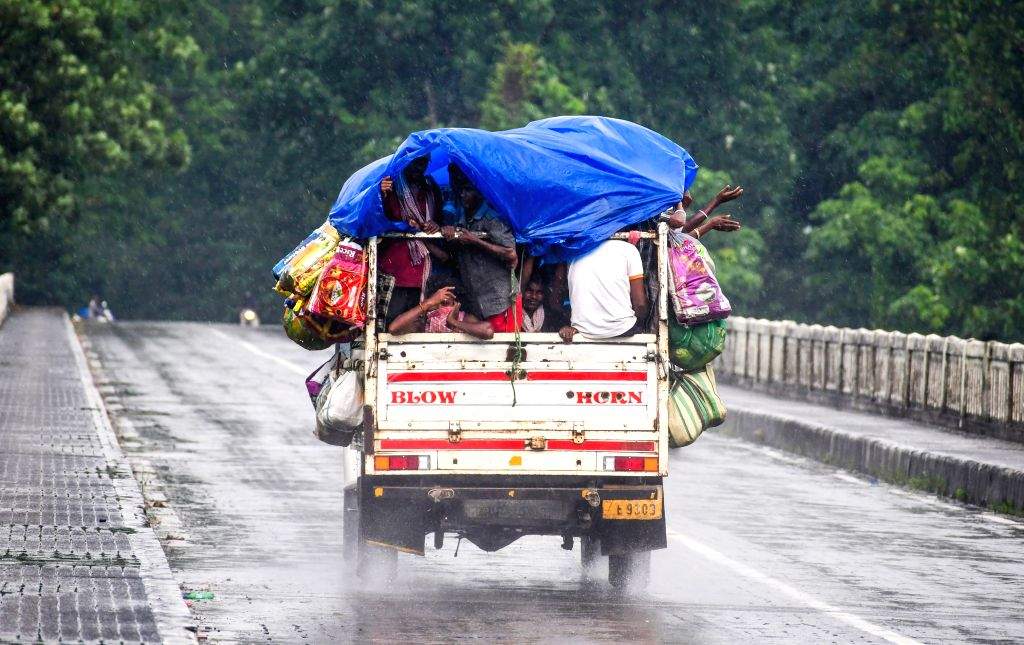
Jalpaiguri: Tea garden workers return home in a pickup vehicle amid monsoon rain. Photo: Prokerala
Global Tea News Summary
This month’s tea industry news once again highlights mounting pressures: volatile prices, climate shocks, and export disruptions straining tea plantations and tea smallholders across Africa and South Asia. Land disputes in Kenya, wild animal attacks in India and Sri Lanka, wage protests in India and Bangladesh, regulations squeezing smallholder tea farmers’ precarious margins in India, Sri Lanka and Kenya…
This may not seem like news – it is more or less what these news updates report every month. But it is important to keep focusing on these pressing issues and on how to change the things that are causing them. And over the past few months we have started seeing a gradually increasing number of stories about how the industry is adapting, mitigating and showing resilience in the face of these pressures.
Producers are responding by shifting toward tourism and value-added products in Sri Lanka, China, Kenya. Climate adaptation efforts are beginning to have impacts both on crops and on the people who rely on them. New government aid packages and land title distributions in India are moving ahead. And there is news of awards for anti-harassment programs and profit-sharing initiatives
THIRST particularly welcomes the news of awards for tea producers and brands who are trying to tackle issues such as gender-based violence and low wages. We hope to see many more such stories in the coming months and years.
Rising costs, falling prices, climate shocks… the global tea industry is reeling
The FAO has warned that smallholder coffee, cocoa, and tea farmers across Africa face mounting risks from volatile global prices, climate shocks, diseases, and market instability, threatening livelihoods in countries where these crops are vital income sources (Africa News, 14/7/2026).
Tea exporters in East Africa have raised concerns over escalating charges on tea shipments passing through the Port of Mombasa, warning that the growing costs are weakening farmers’ incomes and making East African tea less competitive in the international market. The East African Tea Trade Association (EATTA) called for a review of taxes and levies imposed on tea traders that, they say, are increasing export costs. (The Eastleigh Voice, 28/7/2026)
Tea communities across South Asia are also grappling with economic strain and intensifying land rights disputes. In Sri Lanka, plantation workers face mounting hardship as Middle East conflict disrupts exports—shipments to Iraq fell 38% and to the UAE plunged 93%—forcing families to cut meals and pull children from school amid rising costs (Reuters, 21/05/2026).
Plantation workers are facing crisis after crisis…
Thangawel Ganeshalingam, convener for the Movement for Plantation People’s Land Rights.
In Vietnam, hundreds of households in the Lien Son tea-growing region are struggling due to low and unstable purchase prices. The lack of processing facilities and local product distribution means that the output of fresh tea largely depends on small-scale traders. (Vietnam, 30/7/2026)
Pivoting from volumes to value
Increasingly, in an effort to address these multiple crises, tea-producing regions are pivoting from bulk exports toward experience-based, value-added models. In Sri Lanka, the government is building 500 cluster “tea villages” and flagship estates offering visitor experiences like plucking and blending, targeting $2.5 billion in export revenue by 2030, while homegrown brands like Island Tea Co. extend the concept into international markets (Myanmar International TV, 11/7/2026). A similar blend of heritage and tourism is unfolding in China‘s Nannuo Mountain, where ancient Pu’er tea forests grown alongside rainforest ecosystems now draw visitors, turning cultural heritage into new income beyond tea sales (China, 14/7/2026).
Our villagers have seen clear increases in their incomes
Gu Xia, Owner of a Nannuo tea garden
In Kenya, value addition is taking a more industrial route: the government has opened Africa’s first Japanese Sencha green tea processing facility in Kirinyaga, funded by Japan, and is upgrading machinery and expanding specialty lines to shift farmers from volatile black CTC tea toward higher-margin green, purple, and specialty varieties (The Star, 23/7/2026; KBC, 24/7/2026).
Climate volatility shaping tea cultivation strategies worldwide
Climate volatility is shaping tea cultivation strategies worldwide, prompting both precautionary measures and reactive crisis responses.
Climate impacts have turned severe in Assam, India, where flooding from a cloudburst in neighbouring Nagaland submerged tea estates in Sivasagar district, forcing a pregnant worker to give birth inside a factory after medical access was cut off, and displacing thousands into elevated shelters (Assam Tribune, 20/7/2026; The Shillong Times, 20/7/2026).
But there were also numerous media stories this month about efforts to tackle or mitigate the impacts of the climate crisis on the tea industry. In Sri Lanka, for example, the Tea Research Institute issued guidance urging growers to prepare for an intensifying El Niño, recommending mulching, rainwater harvesting, efficient irrigation, shade tree maintenance, and pest monitoring ahead of expected disruptions (Sunday Times, 5/7/2026). And Bogawantalawa Tea Estates, billed as the world’s first Climate Positive Tea Company, marked World Environment Week by planting roughly 15,000 native and fruit-bearing plants across its estates with government, school, and community partners (Sunday Times, 5/7/2026).
Regenerative practices are also central at Wild Orchard Farmstead on South Korea‘s Jeju Island, where deep-rooted organic tea plants sustain a thriving soil ecosystem without irrigation, while grazing geese provide natural pest control and fertilization (Forbes, 08/07/2026).
This is not just about the absence of chemicals, but the presence of life
Michael Ham, Counder of Wild Orchard
In Vietnam‘s Binh Yen commune, growers like Bui Thi Xiu rely on natural predators and light traps to manage seasonal pest surges affordably (Vietnam, 18/7/2026). In Taiwan‘s Alishan region, tea farms face soil degradation, ageing trees, and climate pressures, though families like the Lins have found resilience through chemical-free, nature-based cultivation that improved yields even amid spring droughts (Taiwan Insight, 20 /7/2026).
You shouldn’t overmanage (tea trees) but should let them grow on their own; they know where to seek water and nutrients, and their roots reach deep… we had severe spring droughts, but our harvests have been pretty impressive.
Mr Lin Kuang-Li,Longyanlin tea farm
Indian tea company’s anti-sexual harassment efforts honoured
Luxmi Tea Co Private Limited, which runs 21 tea estates in India and four in Rwanda, won the Excellence in POSH (Prevention of Sexual Harassment) Governance and Compliance Award at the 4th National POSH Conclave and Excellence Awards 2026 in New Delhi, recognising work under the Sexual Harassment of Women at Workplace Act, 2013. Over two years, the company held 144 awareness workshops in local languages, reaching nearly 10,000 workers, and has since introduced estate-level champions and stronger internal committees. A plucker at Moran Tea Estate said the training gave workers confidence to report concerns and support one another (NE Wire, 24/7/2026).
Earlier, many of us did not know where to go or whom to approach. Today we understand our rights and know someone will listen. The training has given us confidence to speak for ourselves and to stand beside other women.
Monumoti Kalandi, Tea plucker at Moran Tea Estate
Initiatives like these will be highlighted in THIRST and Women Working Worldwide’s upcoming Behind the Brew report. We hope to see many more stories like these in the media going forward. It is important for the whole tea industry to work together to tackle the egregious and endemic issue of gender-based violence and harassment in the sector, and a key first step is sharing lessons between us. Other companies are encouraged to tell us about similar initiatives you may be running. Contact us to share your experience.
Pesticide-fertiliser restrictions straining smallholder tea famers
Regulations seeking greater food safety for consumers are leading to increased pressures for tea producers in South Asia. In India, after Tata Consumer Products and Hindustan Unilever announced they would stop procuring tea failing pesticide residue standards, growers in Assam and Bengal appealed for relaxed enforcement, warning of threats to farmer livelihoods (Telegraph India, 29/07/2026). The North Bengal Tea Producers Association subsequently suspended green leaf procurement from roughly 50,000 grower families starting July 27 over chemical residue concerns (The Statesman, 28/07/2026).
Sri Lanka’s tea smallholder farmers’ productivity has fallen to about 150kg of green leaf per acre monthly against a potential of 600kg, following successive glyphosate and agrochemical bans; following a meeting with Tea Exporters Association, the President has backed calls for infilling initiatives to lift yields and export revenue. (Adaderana, 1/7/2026).
Smallholders in Tripura, India on the other hand, may find support from four private companies – Monoworld Recycling, Itibachak Barta Foundation, Infidirect Tech Solutions, and NDR Infrastructure. They have proposed Rs 726 crore in investments expected to create around 4,000 jobs and support small tea grower clusters, research, skill development, digital adoption, branding, and tea tourism (Millennium Post, 8/7/2026).
In Kenya, while the Tea Board’s proposed 0.8% export levy on bulk tea continues to cause fears of impacts on smallholder tea farmers’ incomes, (Kenyans, 7/7/2026), infrastructure investment is easing logistical burdens: construction of the Rukuriri-Kathageri-Kanyuambora road in Runyenjes is set to improve farmer access to KTDA collection centres and reduce post-harvest losses (The Star, 20/7/2026).
For many years we carried tea on our backs because vehicles could not access some sections of the road, especially during the rainy season. This road will transform farming by making it easier to transport our produce.
Paul Njiru, Tea farmer
Similarly, Kirinyaga County is building four new tea-buying centres in Inooi and Kerugoya to address farmers’ long-standing struggles with dilapidated facilities and costly transport (KBC, 30/07/2026).
Governments step up to support tea plantation workers
Governments across South Asia are moving to address welfare and structural challenges facing tea garden workers and estates, with mixed progress. West Bengal (India) Chief Minister Suvendu Adhikari announced a Rs 313.30 crore assistance package for tea garden workers in North Bengal, allocating Rs 177 crore for education, Rs 72 crore for health facilities, and Rs 63 crore to build 321 resting sheds equipped with solar power and sanitation (The Hawk, 5/7/2026).
Alongside this support, the state government took a firmer stance with estate managements, warning nearly 30 closed or struggling North Bengal estates to clear unpaid provident fund, gratuity, and wage dues or face legal action, including police complaints (Telegraph India, 13/7/2026).
We have sent a clear message to planters that if provident fund, gratuity and wages are not paid on time, they should be prepared to face imprisonment
Arjun Singh, Labour Minister, India
Further east, the Tea Association of India urged Assam to continue its Special Incentive Scheme in the 2026-27 Budget, citing a 36% rise in Orthodox tea production attributed to the tax waiver (Daily Excelsior, 9/7/2026).
Reform efforts are also underway further afield in Bangladesh, where the government taskforce mentioned in THIRST’s July News Update has proposed 59 reforms to address years of financial strain in the tea sector, including cheaper credit, tax cuts, debt restructuring, and a regional support office for over 8,000 smallholders in Panchagarh, alongside minimum labour welfare standards covering schools, dispensaries, and roads (The Daily Star, 26/7/2026). In parallel, MP Syed Md. Faisal said the government continues working to improve education, healthcare, and housing for impoverished tea worker families across 23 gardens in Madhabpur and Chunarughat (The Country Today, 25/7/2026).
The Sri Lankan government’s drive to build a knowledge-based digital economy while improving efficiency, transparency and accountability in the labour-intensive tea industry has resulted in Goomera Estate becoming Sri Lanka’s first state-owned tea plantation to implement a fully integrated digital estate management system. The platform – introduced by Agrithmics Pvt Ltd – automates wage calculations, ensuring workers receive accurate and timely payments while reducing the risk of manual errors. The State Plantation Corporation (SPC) said it plans to expand the system to all its estates by the end of the year. (Daily News, 7/7/2026)
In less positive news, media reports that more than seven months after Cyclone Ditwah, estate workers remain in limbo: 10,310 families were affected and hundreds of line rooms destroyed or damaged, yet a promised compensation package of 5 million rupees and a 10-perch land plot per family, announced in June, had still not been implemented a month later (World Socialist Website, 9/7/2026).
Our two children barely escaped with their lives. We informed the relevant government authorities immediately, but despite promises, we have received neither a house nor land… leaving us no choice but to live in my brother’s cowshed.
V. Prakalathan, Tea plantation worker
Welcome investments in healthcare as wild animal attacks continue
West Bengal, India, finalised the Rs 313.30-crore Pradhan Mantri Cha Shramik Protsahan Yojana, a Central scheme aimed at improving healthcare, education, and resting facilities for over 10 lakh tea garden workers across Assam and West Bengal, (Daily Pioneer, 6/7/2026). Responding to the scheme’s ₹72 crore healthcare allocation, the Indian Gorkha Janshakti Front’s trade union urged the state to upgrade existing hospitals and dispensaries in Darjeeling’s tea belt rather than build new facilities, while backing a hub-and-spoke model for secondary healthcare (The Telegraph India, 23/7/2026).
We feel improvement and revival of the existing establishments in tea gardens, coupled with new health centres in central locations, can largely improve the healthcare access and service delivery for thousands of tea garden workers and their families in the tea belt of north Bengal
Trade Union Leader
While these efforts are welcome, virtually every monthly THIRST News Update contains a story about tea workers or their children being injured or killed by wild animals. For exampe; In Sri Lanka, a 61-year-old plantation worker was killed and five others injured in a wasp attack in the Lindula Police Division (Daily Mirror, 31/7/2026). While workers in India’s Devikulam and Munnar areas, are being advised by the Forest department to ensure that livestock are brought into sheds early in the afternoon. Tigers have been regularly preying on cattle across both forest ranges. (The Hindu, 22/7/2026). More needs to be done to reduce this ongoing risk, preferably taking a landscape approach that addresses the root causes of the animals’ encroachment into areas of human habitation or work.
Low wages in the tea sector have driven other workers into dangerous alternative work; nine of the twenty-five workers who died when an under-construction tunnel in Sikkim, India, collapsed after a gas explosion (BBC, 22/7/2026) were tea garden labourers from Jalpaiguri district, mostly from Adivasi families who had left low-wage estate work in search of better livelihoods (The Statesman Bhubaneswar, 23/7/2026).
Worker welfare and wage disputes abound
Tea worker welfare and wage disputes once again dominated developments across the sector this month, alongside recognition for supply-chain innovation.
In Bangladesh, the government announced it would review and reset the minimum wage for tea workers in August, as customary triennial revisions continue (United News of Bangladesh, 9/7/2026). Discontent over pay nonetheless boiled over in Sylhet, where workers blocked the Sylhet-Tamabil highway demanding a Tk500 daily minimum wage, rejecting a “farce” 5% pay-hike gazette, and calling for land ownership rights after nearly 200 years of landlessness (Dhaka Tribune, 25/7/2026).
In India, north Bengal’s Joint Forum of over 20 trade unions launched a movement demanding fixed minimum wages, welcoming the Centre’s ₹313 crore welfare allocation but stressing it did not address core pay demands (Telegraph India, 07/07/2026). Meanwhile, the crisis at Darjeeling’s Longview Tea Estate escalated sharply: after Labour Minister Bhaskar Bhattacharya appealed for workers to end their hunger strike (United News of India, 13/7/2026), a 50km “Long March to Longview” was staged as the relay hunger strike neared its 95th day; Rs 1.28 crore in wages and Rs 3.07 lakh in Provident Fund dues were released, though EPFO sealed the estate’s office and factory over unpaid contributions (The Statesman, 26/7/2026). Estate owner Govind Garg was subsequently arrested and remanded in an EPFO case over unpaid PF, gratuity, and wage arrears totalling over Rs 13 crore (Millennium Post, 26/7/2026).
We have taken part in this march in support of the tea garden workers… Our agitation will continue till the workers get their rightful dues.
Semika Lama, Student
In a rare positive story on plantation workers’ wages, UK-based Ahmad Tea won Social Impact Initiative of the Year at The Grocer Gold Awards for its Hand-picked Profit Shared programme, which in its first year gave over 6,000 tea pluckers direct bonuses worth three to four days’ wages, halving the regional living wage gap (International Supermarket News, 8/7/2026). Welcome though such voluntary initiatives are, until the industry as a whole tackles the issues of low wages (intrinsically linked to low prices among other factors) the majority of pluckers will continue to be underpaid.
Land rights and wrongs across India and Kenya
Land rights dominate developments in India‘s Assam, where the government announced 1.14 lakh tea worker families across 250 gardens would receive land pattas (official land title or land-record documents issued by the government in India) in the second phase of a scheme, building on 28,831 pattas already distributed (The Meghalayan Express, 6/7/2026). This was followed by a further pledge to grant pattas to 3.5 lakh workers and fund housing construction (India Today, 14/7/2026). Meanwhile, in West Bengal, tea unions demanded reforms to the PMAY-G housing scheme, arguing its outdated “kutcha [non-permanent] house” eligibility criteria and land-document requirements exclude most workers, and called for either universal coverage or loan write-offs (Millennium Post, 7/7/2026). Tensions also flared in Assam’s Maskara tea estate, where workers halted road construction linking a hospital to the highway, protesting land acquisition through the estate (The Sentinel, 9/7/2026).
About 70% of the Hill population reside in tea gardens and do not have land documents.
Sonam Lama, Member of Legislative Assembly, Kurseong
In Kenya, land disputes turned volatile. Over 200 Kipsigis clans revived a campaign to reclaim land occupied by multinational tea firms in Kericho and Bomet, issuing a 30-day notice demanding title deeds be surrendered or facing court action (Standard Media, 15/7/2026). Separately, violence erupted at the disputed 1,200-acre Samburet Estate on the Kericho-Nakuru border, injuring several youths and destroying five motorcycles amid long-running ownership battles (Standard Media, 3/7/2026).
Nepali tea crisis reaches uncertain conclusion
Nepali tea exports to India resumed after being stalled for two months due to administrative and technical hurdles (see THIRST’s July News Update) , bringing relief to producers and farmers who had suffered significant financial losses. The resumption followed a policy shift by India’s Food Safety and Standards Authority (FSSAI), which on June 23 introduced a risk-based testing system, cutting mandatory testing from 100% of consignments to random sampling of just 20%. The change came only after Nepal’s Prime Minister’s Office gave concrete assurances of diplomatic and administrative action toward a long-term solution (Ratopati, 2/7/2026).
Despite the resumption, uncertainty persists. Tea entrepreneur Gopal Kattel noted producers “cannot be sure when another restriction will appear.” With both countries in peak tea season, Nepali producers say Indian authorities tighten restrictions annually to protect their domestic market. Industry voices criticised Nepal’s government for failing to secure long-term market access through government-to-government agreements (Republica, 6/7/2026).
Share this update
Sign up for our monthly newsletter to stay in the know about human rights in the tea sector
Each issue of our newsletter includes:

A summary of the latest tea sector news

Upcoming THIRST events

THIRST news and updates

New reports and resources from our Knowledge Hub
Latest news, views and events
View all Upcoming Event
 THIRST news
THIRST News August 2026
THIRST seeks new Chair; Darjeeling Tea Multi Stakeholder Roundtable 27 Nov; Behind the Brew Update; Next Circle of Tea meeting 29 Sept
 Tea News Update
August Tea News Update 2026
Tea industry pivots from volumes to value amid price, cost and climate shocks; efforts to tackle, mitigate climate impacts; Indian tea company…