
THIRST Tea News Update
July 2026

Pombilai Orumai leader, A Gomathi, challenges bureaucracy preventing land ownership. Image: The South First
Summary
This month’s news stories highlighted the interconnectedness of tea producing countries – which is why THIRST advocates for joined up thinking and acting at international level. The Indian government’s import resctrictions on Nepal tea which would have the effect of protecting Darjeeling’s tea industry, have had a devastating impact on Nepal’s tea farmers and factories. Kenya’s newly imposed export levy has led to unsold tea mounting up in Mombasa warehouses, which in turn has given Rwandan tea a big boost. There has been a big increase this month in the number of stories on efforts to tackle the impacts of the climate crisis, and on technological advances to support tea workers. Sadly the stories of workers suffering injuries from wild animals and poor transportation persist, and the struggle for wages and landrights have intensified.
Darjeeling’s relief becomes Nepal’s tea crisis
Tea factories in Nepal faced a growing crisis after India tightened tea import restrictions in mid-April, introducing compulsory laboratory testing that disrupted exports for 21 days. This is something Darjeeling tea producers had long been requesting in order to stem the flow of Nepali tea being sold as counterfeit Darjeeling; a Darjeeling-based planter suggested the standoff would likely ease through bilateral talks, though a prolonged halt in Nepali tea could benefit Darjeeling’s own market in the meantime (Down to Earth, 23/6/2026).
Trade briefly resumed on May 20 under relaxed rules, but India then imposed a stricter requirement testing samples from every bag at importers’ Kolkata warehouses, leaving around 50,000 kilograms of Nepali tea stranded and raising fears of spoilage and financial loss (Kathmandu Post, 11/6/2026).
By mid-June, the Suryodaya Orthodox Tea Producers Association announced it would halt operations from June 15 due to mounting stock and export disruptions (Khabarhub, 14/6/2026). Days later, manufacturers confirmed the shutdown of all 56 factories in Ilam and 30 in Jhapa, blaming the Tea Board of India’s non-transparent procedures. Over 200,000 kilograms of tea sat stranded in Indian warehouses and more than a million kilograms risked rotting in Nepal, threatening 100,000 workers and 30,000 farmer households who depend on India for 90% of Nepal’s tea trade (Nepal News, 14/6/2026). Daily wage labourers were hardest hit. At Giribandhu Tea Estate, workers described losing their only source of income and struggling to afford food (Asia News, 23/6/2026).
Under mounting pressure, PM Balendra Shah’s office announced a task force to study the export problems and deliver recommendations within two weeks (Kantipur, 23/6/2026). With that assurance, factories that had shut down began resuming operations (Online Khabar, 25/6/2026). Days later, a three-point agreement was reached between the Tea Problem Resolution Committee of Suryodaya Municipality, local representatives and the Producers Association: the municipality would arrange storage for the roughly one million kilograms of tea stuck in factories until exports eased, while industrialists and farmers agreed to postpone farmer payments until market conditions improved (Kantipur, 25/6/2026).
Shifting landscape of Indian tea workers’ housing and land ownership
Land and housing rights for India’s tea plantation workers remain unresolved. In Munnar, Kerala, Tamil communities have faced obstruction obtaining caste certificates since the 2015 Pombilai Orumai (Unity of Women) protest, when women workers demanding equal wages also began seeking land rights. Workers allege authorities fear certificates could strengthen land claims, while officials call it a legal issue. Pombilai Orumai leader A Gomathi asked how workers could prove pre-1950 residence with no ancestral documentation, while an IPS officer said certificates are denied because workers lack a permanent address—concluding that land ownership is the only lasting solution (The South First, 2/7/2026).
How can we possibly prove that we were living here before 1950? Our ancestors are buried here. But we have no documents proving where they lived generations ago.
A Gomathi, Pombilai Orumai leader
The Pombilai Orumai (also spelled Pempila Orumai) strike was one of the factors that inspired the foundation of THIRST. A briefing on the strike is available on our Knowledge Hub.
Governments are trying to work around this barrier. In West Bengal, minister Dilip Ghosh said the state is exploring ways to adapt the Pradhan Mantri Awas Yojana (PMAY) housing scheme for tea workers, who mostly lack land titles and are thus ineligible, studying modified models from Assam and Tripura (United News of India, 14/6/2026).
Where land allotments (pattas) have been granted, results are mixed. One report found plots of roughly two gonda encouraged housing investment but were too small for other livelihoods, leaving workers still dependent on plantation labour. Some workers believed—incorrectly, per a plantation manager—that allotments could be cancelled if they stopped working. Many also diverted PMAY housing funds to healthcare rather than construction (IDR, 18/6/2026).
Land disputes have also sparked acute crises: in Tripura’s Harishnagar Tea Plantation, allegations against MLA Antara Sarkar Deb of land misuse and worker harassment—unaddressed by her—have triggered legal action and halted production, leaving roughly 250 families without income and retired workers with unsettled dues (Tripura Chronicle, 28/6/2026).
New hopes – and fears – for increasingly vociferous smallholder tea farmers
Smallholder tea farmers across South Asia and Africa are pressing governments for recognition and support, with mixed results. Assam has included tea and plantation class land in its Farmers’ Registry Portal, giving small growers access to Farmer IDs, government schemes, credit, and services via one platform, expected to ease fertiliser access and reduce reliance on exploitative intermediaries (North East Now, 27/6/2026).
Inspired by this, The Confederation of Indian Smallholder Tea Growers’ Associations (CISTA) has urged West Bengal to adopt a similar policy (The Statesman, 29/6/2026), and separately called for a small tea growers’ development board and formal recognition of growers as farmers eligible for central schemes (Times of India, 9/6/2026).
Fertiliser shortages are a concern elsewhere: in Bangladesh, growers in Panchagarh are struggling to maintain plantations during peak season, warning of reduced output and lost income and government revenue (Daily Sun, 24/6/2026).
In Sri Lanka, over 30,000 smallholders in Badulla district say they’re operating at a loss due to falling leaf prices and rising costs, with fertilizer subsidy requests repeatedly ignored, costing families their main livelihood (Daily Mirror, 24/6/2026). The government launched the “Ceylon Tea Village” programme, targeting $2.5 billion in export earnings and 400 million kg of production by 2030 through higher yields, value-added products, tourism integration, and producer cooperatives (Newswire, 24/6/2026).
In Kenya, a different threat looms: with a High Court ruling pending on Rigathi Gachagua’s impeachment, Mt. Kenya’s Sh218 billion tea sector reportedly fears a return of cartel control over factory boards, a prospect that international buyers are watching warily amid competition from Sri Lanka and India (Streamline Feed, 7/6/2026).
Continued wage struggles for tea workers… sometimes violent
Tea workers across South Asia and beyond have escalated protests over unpaid wages and poor conditions. In the most disturbing incident, there have been allegations that 38 Iranian workers, who came to work in tea plantations in Türkiye’s Rize’s Çayeli district have been physically attacked and injured after demanding their wages. (Haberler, 11/6/2026)
Elsewhere, at Sri Lanka’s Dunkeld Estate in Dickoya, workers entered day five of a strike against Kahawatte Plantations management, alleging they haven’t received the government’s Rs. 200 daily allowance, with the company instead paying Rs. 1,550 daily and requiring 20kg of leaf plucked to qualify. Talks on June 9 failed to reach a resolution (Hiru News, 10/6/2026).
Meanwhile, the Sri Lankan Government has rejected Amnesty International’s report Abandoned by the State, trapped in private plantations, which alleges human rights and labour violations against Malaiyaha Tamil tea workers. Vidyarathna defended the government’s record, citing a “historic” daily wage increase of Rs 400 (split Rs 200 from government livelihood support, Rs 200 from plantation companies) and an ongoing housing and land ownership programme for plantation workers supported by India (The Morning, 10/6/2026).
In Assam, India, workers at Mohanbari Tea Estate in Dibrugarh held a one-hour demonstration organised by the Assam Chah Mazdoor Sangha, demanding cash wage payments, firewood provision and quarters repairs. Workers said the plantation’s frequently non-functional ATM forces them to travel to Mohanbari town just to access their fortnightly bank-transferred wages (Times of India, 17/6/2026). And in West Bengal, the Labour Department convened a tripartite meeting over the crisis at Longview Tea Estate near Siliguri, following 50 days of relay hunger strike since April 21 and two further 72-hour hunger strikes on June 13 and 16. (United News of India, 17/6/2026).
We have to go all the way to Mohanbari town just to access our wages. It wastes our time and causes unnecessary hardship. We want wages paid in cash.
Tea plantation worker
Tea industry converging on sustainability as necessity and market imperative
Climate change hits smallholder farmers directly — disrupted seasons, ruined harvests, storm-triggered landslides. They produce an estimated 70% of food in developing countries, yet receive just 0.8% of global climate finance. IFAD’s ASAP+ programme aims to close that gap, targeting $500 million to benefit over 10 million people (CGTN, 5/6/2026).
The scale is stark: the Lancet Countdown reported 640 billion work hours lost to heat in 2024, with agricultural workers — tea pickers included — bearing nearly two-thirds of losses globally, rising to three-quarters in low-HDI countries (ECIU, 8/2026).
Against this backdrop, tea is converging on sustainability. In Vietnam, growers are adapting to buyers who now inspect production directly. Tong Van Vien of Phu Luong Agricultural Cooperative said chemical use no longer meets market expectations; organic conversion is harder short-term but stabilizes value long-term. Dao Thanh Hao of Hao Dat Tea Cooperative added that customers now scrutinize everything from soil to by-product handling (Vietnam, 1/6/2026).
Science offers new tools: a Biochar review found biochar can improve soil fertility and reduce toxic metal uptake into tea leaves, per lead author Md Shafiqul Islam (Farms.com, 2/6/2026). China’s Tea Research Institute confirmed Anji county’s green practices meet standards, validating its status as an FAO low-carbon tea demonstration base (People’s Daily, 5/6/2026).
Some organizations have built models to help farmers adapt. Taiwan’s Tse-Xin, via its “Jingyuan” project in Pinglin since 2007, uses contract farming and guaranteed prices to offset organic conversion risks — growing from one farmer on five hectares to 36 farmers on 57 hectares in 18 years (Taiwan Panorama, 1/6/2026).
Markets are catching up too: Taiwan’s Tea and Beverage Research Station helped farmers complete the island’s first tea products with carbon footprint labels, aiming to boost competitiveness (Taipei Times, 29/6/2026).
Sri Lankan tea exporter launches women’s leadership initiative
Eswaran Brothers Exports, a leading tea manufacturer in Sri Lanka, as part of its commitment to advancing women’s empowerment and building a stronger leadership pipeline, recently launched its flagship women’s leadership initiative, She Transforms. This is a customised six-month leadership development journey. Developed with leadership expert Senela Jayasuriya and supported by Value for Women, the programme forms a key pillar of the company’s wider gender agenda focused on leadership capacity building, inclusion and long-term institutional change, the company said in a media release. (Sunday Times, 7/6/2026)
Women began leading beyond their titles, showing up with increased visibility, voice and conviction.
Nimali Senevirathne , Group Head of HR and Legal at Eswaran Brothers
Kenya’s tea export levy sparks protest; unsold tea mounts up
Kenya’s tea export levy which came into effect on May 1, 2026, applying a 0.8% levy on the auction or customs value of tea exports, has sparked industry pushback. Farmers in Kirinyaga County, led by John Mithamo Wasusana of Ndima Tea Factory, called the levy punitive, citing a recent auction where only 2.1% of Rukuriri Tea Factory’s tea sold: “We are completely killing the Kenyan tea farmer… Kenyan tea has become more expensive” (Sacco Review, 4/6/2026). The government has defended the levy insisting farmers won’t bear the cost and that proceeds will be reinvested in the sector (The Star, 1/6/2026).
We are completely killing the Kenyan tea farmer… Kenyan tea has become more expensive
John Mithamo Wasusana, Chairman of Ndima Tea Factory
Meanwhile, unsold tea at the Mombasa Tea Auction has hit its highest level this year, with stakeholders blaming the levy alongside weakening demand and rising competition from India, Sri Lanka, and Uganda (Food Business MEA, 10/6/2026). Since the introduction of the levy, Kenyan tea has struggled to maintain competitiveness with tea from other countries in the region, particularly Rwanda, which has seen rising prices. (Zawya, 15/6/2026)
Bangladesh tea progresses on institutional reform, worker welfare, and production
Bangladesh’s tea industry is drawing attention on multiple fronts — institutional reform, worker welfare, and production challenges.
On the institutional side, a 10-member committee has been formed to modernise and standardise the sector, drawing on government bodies, regulators, and industry stakeholders to strengthen research and planning, review existing challenges, and boost productivity and global competitiveness (The Daily Star, 8/6/2026).
Worker welfare has also come into focus. At a Habiganj rally, Prime Minister Tarique Rahman rolled out welfare measures for tea plantation workers built around three pillars: economic relief for women, housing security, and educational mobility (Pressenza, 18/6/2026). Echoing this, discussants at a Moulvibazar programme called for fair wages, better housing, healthcare, and education for tea workers as essential to the industry’s sustainable development (New Age Bangladesh, 21/6/2026).
These measures will hopefully address the poor living and working conditions of Bangladeshi tea plantation workers that have long been a matter of record. Last month Bangladesh’s Commerce Minister said that the National Security Intelligence (NSI) has identified 31 tea plantations as vulnerable to labour unrest due to unpaid wages of workers and employees… after owners abandoned their plantations, leading to mismanagement, many workers did not receive their wages. (Daily Star, 23/6/2026).
Tea workers at continued risk from wild animals and unsafe transportation
Tea plantation workers in India faced a string of safety and welfare stories this month, from acute incidents to longer-term wildlife conflict and health interventions.
In Assam’s Cachar district, around 40 tea plantation workers were injured when a bus transporting them between two tea plantations crashed. The injured were treated locally, with the most serious cases referred to Silchar Medical College and Hospital (North East Live, 22/6/2026).
Wildlife conflict also threatened tea communities. At Bokpara Tea Estate, a leopard that had preyed on livestock for nearly three weeks was finally captured after the forest department set a cage in the plantation, where thick tea bushes had given it cover (Times of India, 28/6/2026). In Kerala, a tiger released into the Periyar Tiger Reserve has been straying into Vandiperiyar villages for two months, posing a serious threat to tea plantation workers (The Hindu, 28/2026).
On a more positive note, the PROSPER trial found that providing reading glasses to Indian tea workers with presbyopia boosted productivity by 22%, a low-cost intervention with outsized impact given that roughly 70 million Indians live with some form of visual impairment (BW Healthcare World, 4/6/2026).
Digital transformation reaching tea workers across South Asia
Digital transformation is reaching tea workers across South Asia. In Bangladesh, several hundred workers at Kazi & Kazi Tea Estate in Panchagarh are now receiving wages through bKash’s digital payroll solution, reducing cash dependence and expanding access to formal financial services (The Business Standard, 4/6/2026; The Financial Express, 15/6/2026). However, the success of such initiatives depends on there being functioning ATMs on tea plantations, as evidenced in the article above: ‘Contined struggles over payment of tea workers’ wages’.
Now, I receive my salary on time through bKash and spend it the way I choose
Halima Akhter, Worker at Kazi & Kazi Tea Estate
In Sri Lanka, Agrithmics Pvt Ltd has gone further, introducing a fully integrated digital estate management system at Goomera Estate — the first government-owned tea estate in the country to embed such technology, aligning with the state’s wider digitalization drive. Replacing manual record-keeping long prone to inefficiencies and errors, the Agrigen platform ensures workers receive accurate, automated wage calculations, lets field officers log plucking data and attendance in real time via mobile apps and digital scales, and gives management live, GPS-enabled dashboards for faster decision-making across field and factory operations (Ada Derana, 23/6/2026).
Share this update
Sign up for our monthly newsletter to stay in the know about human rights in the tea sector
Each issue of our newsletter includes:

A summary of the latest tea sector news

Upcoming THIRST events

THIRST news and updates

New reports and resources from our Knowledge Hub
Latest news, views and events
View all Upcoming Event
 THIRST news
THIRST News September 2026
• • This month’s upcoming THIRST events, new Knowledge Hub resources, Chair recruitment and more. See also September’s Tea News Update. Photo:…
 Tea News Update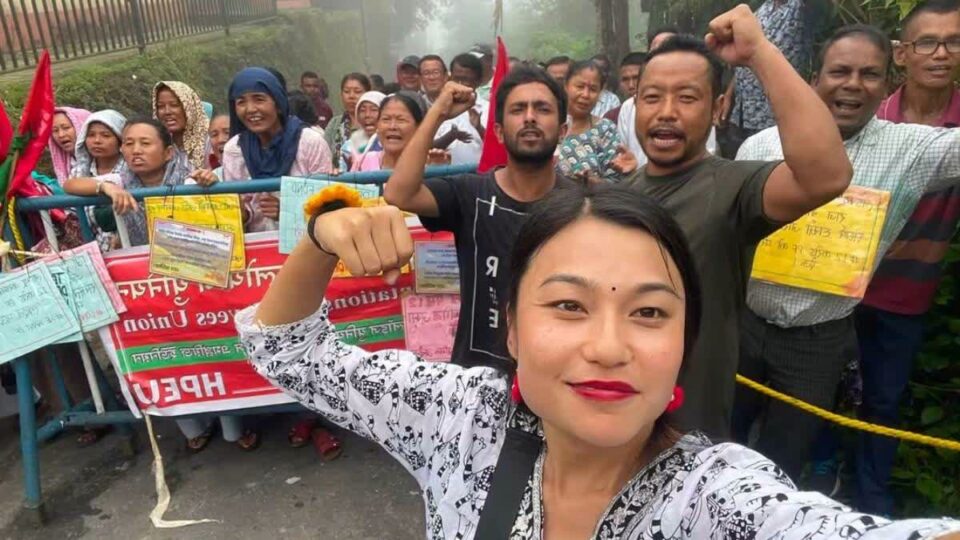
September Tea News Update 2026
Tackling climate impacts is “operational necessity” for tea; “seismic structural shift” in Kenyan tea sector; wage unrest spreads across India, Bangladesh.