
THIRST Tea News Update
September 2026

Tea workers celebrate victory of 101-day hunger strike for overdue payments. Photo: ETV Bharat
Summary
Global tea production is shifting from bulk commodity output towards quality which could lead to greater sustainability and fairer livelihoods.
Programmes in India, Vietnam, and Kenya are boosting speciality tea and smallholder value chains (now over 50% of global tea production), while climate shocks, including floods, landslides, and pest outbreaks, are forcing majors like Unilever and Tata toward regenerative agriculture.
Governments in Kenya, India, Sri Lanka, and Bangladesh are introducing reforms: digital payments, tax relief, certification schemes, and worker welfare infrastructure.
Wildlife attacks (leopards, tigers, snakes, hornets) remain a serious safety threat to workers – urgent measures are needed.
Wage unrest continues across Assam, Darjeeling, and Bangladesh amid low tea prices – stakeholders across the value chain must face the need for better prices. Meanwhile, alternative models—farmer-owned factories, direct-sale platforms, and grassroots innovation—show promising paths toward more equitable, resilient tea economies.
Enhancing livelihoods through better quality tea
The era of tea being sold as a cheap bulk commodity may be gradually coming to an end as efforts across tea growing regions embrace a range of ways to enhance its value. In previous THIRST updates we have covered efforts by governments of countries such as Kenya – that historically mass-produced CTC – to expand their speciality tea production. Now efforts are being seen across other tea producing countries to move away from quantity and towards quality.
In Assam’s (India) Karbi Anglong district, a training programme is helping women turn locally grown tea into higher-value handmade Green Tea and Traditional Tea – creating a potential source of sustainable, home-based income while keeping traditional knowledge alive. The approach requires relatively low investment and can be practised at the household level, making it particularly relevant for women dependent on subsistence farming and seasonal agricultural labour. (ANI, 20/08/2026)
Elsewhere in India, The Tea Board has launched a series of skill development courses in tea tasting at the Tea Research and Development Centre in Darjeeling, which “is intended to build a professional workforce capable of enhancing the quality standards and global market presence of Indian tea.” (Whalesbook, 3/8/2026)
Tea grower Long Van Nguyen in Vietnam, is revitalizing the soil his tea plants grow from by “participating in a model applying biological products and moving towards organic production… What he hopes for now is to produce cleaner, better quality products and sell them based on their quality.” This reflects a transformation throughout Thai Nguyen’s tea-growing regions. “While tea growers previously focused heavily on productivity and output, today, VietGAP, organic farming, registered growing areas, traceability, supply chain linkages, and deep processing are becoming new requirements.” (Vietnam, 29/08/2026)
Tackling climate impacts is now an “operational necessity” for tea
As the litany of news items about devastating climate impacts on the tea sector and its people continues this month, major companies are recognising that tackling them is now an operational necessity.
Climate impact stories this month include devastating monsoon rains triggering “lethal mudslides and severe infrastructural flooding across Sri Lanka‘s critical high-altitude tea-growing regions” closing schools and injuring workers (Streamline, 4/8/2026); thousands of kilos of tea going to waste “after floods and landslides severed road connectivity to processing factories, dealing a severe financial blow to hundreds of growers (in Nagaland, India) whose livelihoods depend on tea cultivation.” (Eastern Mirror, 6/8/2026); “unprecedented” and “devastating floods” striking more than 30 tea estates in Assam whose “prolonged impact… has left tea estates and their labourers struggling to recover.” (North East Live TV, 24/08/2026) and entire estates being stripped bare of every tea leaf by looper caterpillars – “With tea production reduced to almost zero, small farmers who have been supporting their families by toiling for years are despairing about their future.” Dilliram Khanal, said “This year, the insects have completely consumed the plants… Now I am afraid to even enter the tea garden. Our livelihood has been snatched away.” (Ratopati, 25/08/2026)
These impacts mean that for tea famers in Assam “Life has become unpredictable,” “Tea is not as profitable as it once was, and there is less certainty about the work” which means that young people are less likely to continue working in it – jeopardising the future of the industry. (DW, 26/08/2026)
In response “Major multinational tea companies such as Unilever and Tata are rethinking sustainability from the ground up. Two forces are converging to push the sector past checkbox certification and into full-scale regenerative agriculture: mounting pressure to disclose Scope 3 supply chain emissions, and the visible degradation of the soil tea depends on… As Scope 3 disclosure deadlines tighten and soil degradation accelerates, tea’s shift toward regenerative practices looks less like a marketing trend and more like an operational necessity.” (STIR, 23/08/2026)
The Kenyan government is also exploring solutions – for example “the use of green hydrogen to reduce carbon emissions from its tea processing industry as part of efforts to develop cleaner energy solutions for agro-processing.” (Tech Review Africa, 20/08/2026)
Governments support tea smallholders in India, Kenya, Sri Lanka
With more than half of all global tea production now coming from smallholder farmers, governments are recognising the need to ensure that they are adequately supported. Meanwhile, plantations in the endangered Darjeeling region are also pushing for support.
The Kenyan tea sector “is undergoing a seismic structural shift as the government aggressively reshapes the Kenya Tea Development Agency (KTDA), granting unprecedented autonomy to smallholder factories [marking] the most significant regulatory intervention in the sector since the inception of the Tea Act.” The newfound autonomy for factory boards to conduct direct sales “fundamentally changes the commercial dynamics…” The era of collective mediocrity is being replaced by a highly competitive internal market. (Streamline, 10/8/2026)
At the same time, the ministers are urging the Tea Board of Kenya (TBK) to eliminate hawking which enables farmers to sell their tea to independent entities more quickly but at lower prices than they would eventually get from KTDA. (KBC, 17/08/2026) Agriculture Principal Secretary Kipronoh Ronoh issued a directive that has resulted in the arrest of tea factory clerks “following complaints by farmers over alleged theft of green leaf and manipulation of weighing scales at tea buying centres”. The Tea Board of Kenya CEO said “Every kilogramme of green leaf delivered by a farmer matters, and no farmer should lose their rightful earnings through manipulation of weighing equipment,” (The Star, 12/08/2026). And Kenya’s President Ruto has directed KTDA to establish a digital payment system for tea farmers within the next three months “to bring transparency to the payment of farmers from the auction, to the buyer, to the factory, and finally to the farmers’ pockets”. (Kenyans, 22/08/2026)
In India, the Assam government has excluded for small farmers and tea growers earning up to Rs 10 lakh from agricultural income tax, which larger companies will be subject to. “The revenue generated through the restored tax would be utilised for the welfare and development of tea garden communities.” (Social News XYZ, 11/8/2026). But plantations are also struggling; the Indian Tea Association (ITA) is seeking intervention from the West Bengal government for the revival of Darjeeling and Dooars tea. “The submitted white papers examined the structural, financial, climatic, labour and market-related challenges the two iconic tea-growing regions are facing and offered a roadmap of policy interventions aimed at restoring competitiveness, strengthening sustainability, protecting livelihoods and promoting long-term investment.” (The Times of India, 26/08/2026)
Support for West Bengal’s nearly 50,000 smallholder tea farmers would be particularly valuable at a time when their incomes have been hit by sudden and strict enforcement of mandatory Maximum Residue Limit (MRL) compliance. Most of these farmers “own less than two acres of tea land and depend entirely on daily sales of green leaves to Bought Leaf Factories. Unlike large plantations, they have neither laboratory facilities nor trained technical personnel to monitor pesticide residues.” (The Statesman, 7/8/2026)
“The Sri Lanka Tea Board (SLTB) is set to introduce Good Agricultural Practice (GAP) and Good Manufacturing Practice (GMP) certification for the local tea industry from 2027 as part of its five-year action plan…” This includes the Ceylon Tea Village project “which aims to establish 500 tea villages across the country… with the objective of strengthening the economic wellbeing of smallholder tea farmers, enhancing their income levels, and promoting the sustainable development of Sri Lanka’s tea industry. (The Morning, 23/08/2026)
Support for tea plantation workers has been more limited; Bangladesh is distributing 20,000 raincoats to tea workers in the Sylhet division” (Views Bangaldesh, 18/08/2026) and the West Bengal government will construct 650 rest sheds across all 302 tea plantations in north Bengal, “to provide toilets and safe drinking water for workers… [and] build more facilities for women workers, who constitute a substantial portion of the tea garden workforce and “…have little opportunity to return home for drinking water, rest or access to a toilet. They often have to relieve themselves inside the tea bushes, exposing them to health and safety risks,” (The Telegraph India, 17/08/2026)
Urgent need to protect tea workers against wild animal attacks
THIRST continues to document stories that demonstrate that tea workers and their families are at endemic risk of injury or death from wild animals. The nature of tea and the terrain in which it needs to be grown means that wild animals are always likely to be in the vicinity. Indeed, many tea companies act as custodians of the natural environment that they occupy. But the means must be found to give tea workers and their families adequate protection against attacks by these animals – and to ensure that adequate medical treatment is available when they are attacked.
Tea growers in Bangladesh report that “many tea workers were bitten by snakes while plucking leaves in the gardens” and that “antivenom was not available at the district headquarters and upazila hospitals for proper treatment, resulting in the deaths of many workers and discouraging others from working in the gardens.” (Bangladesh Post, 23/08/2026)
In Assam, India, 42-year-old tea worker Nakul Goraik was injured in a leopard attack, sustaining injuries to his shoulders, hand and leg.” There have been repeated sightings of leopards for nearly two months in the area, and they have been preying on villagers’ cattle and goats. Local residents say “We are scared to step out of our homes, especially in the evenings and at night. Our children can no longer play outside freely,” (The Times of India, 17/08/2026). Further south, in Gudalur – an area that grows both tea and coffee – there have been two killings of plantation workers by tigers in one month; on 8 August, a tiger killed a 58-year-old coffee plantation worker, M Balakrishnan, on 21 August, 51 yar old coffee plantation worker, K Ravikumar, was killed by a tiger. (Times of India, 21/08/2026)
In Sri Lanka, ten tea plantation workers were admitted to hospital after sustaining injuries in a hornet attack. (HIRU News, 27/08/2026)
Growing wage unrest in Bangladesh and N India
Worker unrest in the tea plantations of India continues apace this month with protests against low or even unpaid wages, and against lack of access to essential services. In recent weeks and months, there has also been an increasing number of stories from Bangladesh about tea workers similarly protesting against low pay, and demanding land rights.
Workers at Sekoni Tea Estate in Assam (India) “have been facing uncertainty for the past three months as operations at the tea estate remain stalled, with workers alleging that they have been deprived of basic facilities, including ration and medical care” affecting nearly 1,000 workers and their families and leaving them “living in fear and uncertainty.” (India Today, 30/08/2016). Also in Assam, around 35,000 workers at Andrew Yule tea plantations “have announced plans to resume democratic protests over the company’s alleged failure to provide their legally entitled wages, benefits, and service-related dues.” (The Assam Tribune, 07/08/2026)
In neighbouring Darjeeling, workers of Longview Tea Estate “finally achieved an unprecedented victory as they received payment of Provident Fund (PF) dues and outstanding wages” – but this was only achieved by undergoing a 101-day hunger strike, (ETV Bharat, 4/8/2026). The Durga Puja festival is often a flashpoint for industrial unrest in India’s tea sector over the amount and timing of the annual bonus. However, “Unlike previous years, the Durga Puja bonus for tea garden workers in North Bengal is likely to be finalised through bilateral negotiations between tea garden owners and workers’ unions, instead of a government directive. The process is expected to be quicker, but the final bonus percentage may take a few more days.” A tea workers’ union leader said: “The workers’ unions will demand a 20 percent bonus and insist that the agreement be finalised at least two weeks before Durga Puja.” (Millenium Post, 26/08/2026)
Meanwhile, the West Bengal government “will set up a dedicated legal team to represent the Labour Department before the National Company Law Tribunal (NCLT) in a move aimed at safeguarding the rights of tea garden workers and taking action against defaulting plantation owners”. (United News of India, 4/8/2026). Also, “the Assam Legislative Assembly on the Tea Tribes and Adivasi Welfare Department has recommended that the Government ensures land ownership and permanent housing for tea garden workers across the state… [and] has widened the definition of ‘Tea Garden Worker’ to include permanent and temporary workers as well as descendants of tea garden workers residing in labour lines and belonging to Tea Tribes and Adivasi communities.” (Sentinel Assam, 1/8/2026)
There has recently been a growing number of protests on similar issues in Bangladesh; last month “the Bangladesh Tea Workers’ Union has demanded a revision of the minimum wage for tea workers, the formation of a new wage board, and the withdrawal of the existing provision for a 5 per cent annual increment, saying the current wage structure no longer reflects the rising cost of living…” (The Daily Observer, 8/8/2026). Workers in several plantations in Bangladesh have been demanding “higher wages, fresh elections to the tea workers’ union and permanent ownership of their homestead land” (Views Bangladesh, 15/08/2026), “protesting allegations that money for their provident fund was being deducted on a weekly [rather than monthly] basis” without prior consultation (The Daily Observer, 20/08/2026); and recognition of their land rights. (The Business Standard, 27/08/2026)
These calls are supported by 135 eminent citizens – “including university teachers and rights activists [who have] expressed solidarity with the ongoing movement of tea workers seeking a higher daily wage…” Citing data from the Institute of Nutrition and Food Science at Dhaka University… they said “the current wage of Tk187 was therefore wholly inadequate to ensure a decent standard of living for tea workers and their families.” (NewAge, 14/08/2026)
In response to these ongoing challenges – which were highlighted on the International Day for the Remembrance of the Slave Trade and its Abolition (The Climate Watch, 24/08/2026) – the government “has formed a 12-member committee to oversee the development of Bangladesh’s tea industry…” it will make recommendations on loans to tea plantation owners…; give its opinion on “establishing a revolving fund for the tea sector at a 6 percent interest rate” and consider “the possibility of officially declaring tea an agricultural product” and of installing solar panels on unused tea plantation land. (The Daily Star, 17/08/2026). However, some commentators are counselling caution; “Establishing solar farms and eco-tourism infrastructure without credible environmental assessments could have devastating consequences on the ecosystem that sustains the plantations, workers and the industry.” (NewAge, 20/08/2026)
The perils of low tea prices
The low retail price of tea can have devastating consequences for growers. For example, “Across Kenya‘s tea-growing counties, parents are raising alarm over what they describe as stagnating tea prices at a time when the cost of living continues to rise, leaving households with shrinking purchasing power and mounting education bills.” (Education News, 29/08/2026) and Tea Association of India, has “stated that a grim reality is unfolding in Assam and West Bengal’s tea industry, where plummeting auction prices in the last five to six weeks have sparked widespread concern, putting the sustainability of the tea industry at grave risk.” (ANI, 29/08/2026)
Alternative approaches continue to thrive
THIRST’s report on Alternative Approaches in the tea sector highlighted non-traditional business models and approaches that demonstrated that it is commercially viable to produce tea in such a way that farmers and workers can exercise their rights and have decent living conditions.
We were therefore delighted to see this report last month about the continuing success of the “Tanzania’s first smallholder farmer-owned factory, Sakare Specialty Tea Company (SSTC)”. The report says it “has significantly improved the crop’s value chain and increased its value on the global market. Prior to the establishment of the factory, tea farmers from Bumbuli and Bungu were earning only US$0.15 per kilogramme of green leaf (raw material). Following the establishment of the factory, however, farmers are generating revenue of at least US$4 per kilogramme of processed tea.” (Daily News, 10/8/2026)
We were also delighted to see that new initiatives are continuing to emerge – for example the “Rimpocha’s model” in West Bengal. This “is a fairly radical idea for an industry historically dominated by auctions, brokers, and middlemen: helping small, often marginalised tea growers in Darjeeling and North Bengal cultivate organic tea, and then giving them the tools to sell it directly.” It’s instigator, Rajah Banerjee “has spoken about building digital hubs within every partnering farming community, allowing growers to market their produce straight to global buyers for a nominal fee, deliberately closing the gap between producer and consumer that he saw as a persistent weakness in the region’s rural economy.” (MarkHub 24, 22/08/2026)
But equally, if not more heartening are these two stories from India of people from within the tea communities themselves bringing about positive change. Kripa Hansda, a tea worker in North Bengal, has “built a small biogas plant behind her house for cooking, as getting an LPG cylinder to her doorstep or collecting firewood from nearby is unenviable. This helps her save nearly Rs 1,200 per month.” Others in the community are looking to follow her example. (ETV Bharat, 9/8/2026). And Manno Wangnao – an award-winning journalist who grew up in the Nagaland region – has “helped hundreds of farmers navigate the Tea Board of India’s registration process, facilitated agricultural machinery, helped open the region’s first direct factory accounts for local tea growers with the support of Tea Board officials, and connected growers to government schemes they had never known existed.” (East Mojo, 18/08/2026).
Share this update
Sign up for our monthly newsletter to stay in the know about human rights in the tea sector
Each issue of our newsletter includes:

A summary of the latest tea sector news

Upcoming THIRST events

THIRST news and updates

New reports and resources from our Knowledge Hub
Latest news, views and events
View all Upcoming Event
 THIRST news
THIRST News September 2026
• • This month’s upcoming THIRST events, new Knowledge Hub resources, Chair recruitment and more. See also September’s Tea News Update. Photo:…
 Tea News Update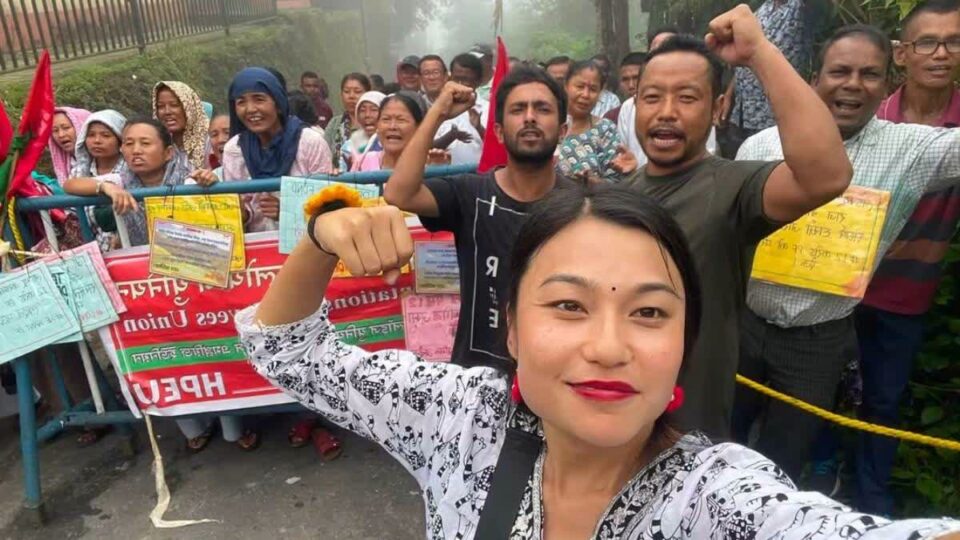
September Tea News Update 2026
Tackling climate impacts is “operational necessity” for tea; “seismic structural shift” in Kenyan tea sector; wage unrest spreads across India, Bangladesh.